

What was Cyclone Bhola?
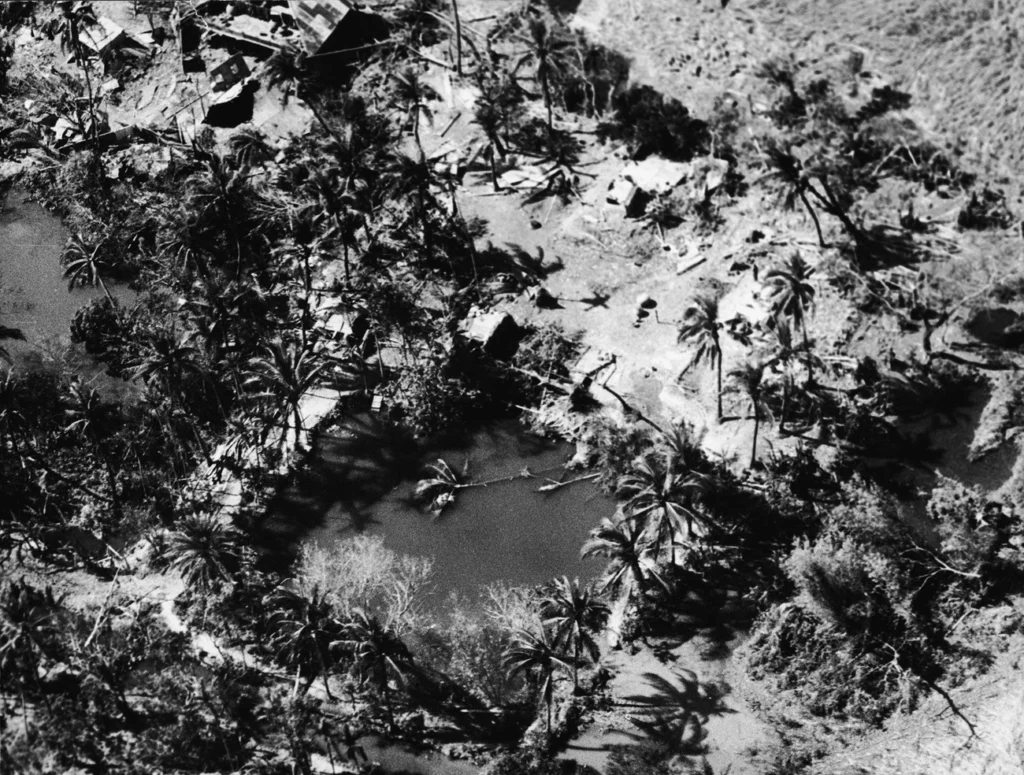
The 1970 Bhola cyclone, also known as the Great Cyclone of 1970, was the deadliest tropical cyclone on record and one of the deadliest humanitarian disasters in modern history. The cyclone struck East Pakistan (present-day Bangladesh) and India’s West Bengal on November 12, 1970, claiming between 300,000 and 500,000 lives. The catastrophic death toll resulted primarily from the massive storm surge that inundated the low-lying islands of the Ganges Delta.
The system originated from a tropical depression that formed over the central Bay of Bengal on November 8, 1970, developing in part from remnants of Tropical Storm Nora that had crossed the Malay Peninsula from the western Pacific. The cyclone represented the sixth and strongest cyclonic storm of the 1970 North Indian Ocean cyclone season. As the system traveled northward, it intensified rapidly, reaching peak intensity on November 10 with sustained winds of 185 km/h (115 mph). By the time meteorologists issued estimates on November 12, ship reports indicated maximum sustained winds near 130 mph (205 km/hr).
The cyclone made landfall on the coast of East Pakistan during the afternoon of November 12, driving a storm surge estimated at 35 feet (10.5 meters) ahead of it. This wall of water swept over flat, outlying islands including Bhola, the largest island in the region. The storm surge devastated offshore islands, obliterating entire fishing communities and destroying crops throughout the affected areas. In Tazumuddin, the most severely impacted upazila, over 45% of the population of 167,000 perished in the disaster. The cyclone dissipated rapidly after moving inland, leaving an estimated USD 86 million in damage.
How many people died in the 1970 Bhola cyclone?
The official death toll estimates
Fatality estimates from the cyclone range significantly, with at least 300,000 deaths confirmed and possibly as many as 500,000. Initial surveys conducted in affected regions estimated mortality at 14.2%, equivalent to approximately 240,000 deaths. The mean mortality throughout the affected region measured 16.5%. Specifically in Tazumuddin, mortality reached 46.3%, corresponding to approximately 80,000 deaths in that thana alone. Alternative estimates place the range between 230,000 and 550,000 fatalities.
Why the exact number remains unknown
The precise death toll remains undetermined on account of absent census records in the affected areas. Post-disaster studies excluded certain population groups, particularly nearly 100,000 immigrant workers employed in rice harvesting. Families that perished entirely went unaccounted for in official calculations, potentially elevating the actual toll toward 550,000. The lack of comprehensive documentation systems in East Pakistan prevented accurate pre-cyclone population counts, making precise casualty verification impossible.
Demographics of casualties
Demographic analysis revealed that more than half of all fatalities were children under age 10, despite this group constituting only one-third of the pre-cyclone population. The highest survival rate occurred among adult males aged 15-49. Children, elderly individuals, and sick persons faced substantially elevated mortality risks from both the immediate storm surge and subsequent conditions. Survivors within the 15-49 age range often sustained injuries, with many exhibiting what medical experts termed “cyclone syndrome”—severe chest and limb abrasions from attempting to cling to trees during the surge.
Comparison with other deadly cyclones
The 1970 Bhola cyclone stands as the deadliest tropical cyclone on record. The second-deadliest cyclone, the 1931 Shanghai typhoon, killed 302,040 people. More recently, the 1991 Bangladesh cyclone claimed 138,866 lives, while Cyclone Nargis in Myanmar resulted in 138,373 fatalities in 2008.
Why was Pakistan’s response to the disaster criticized?
Delayed relief operations
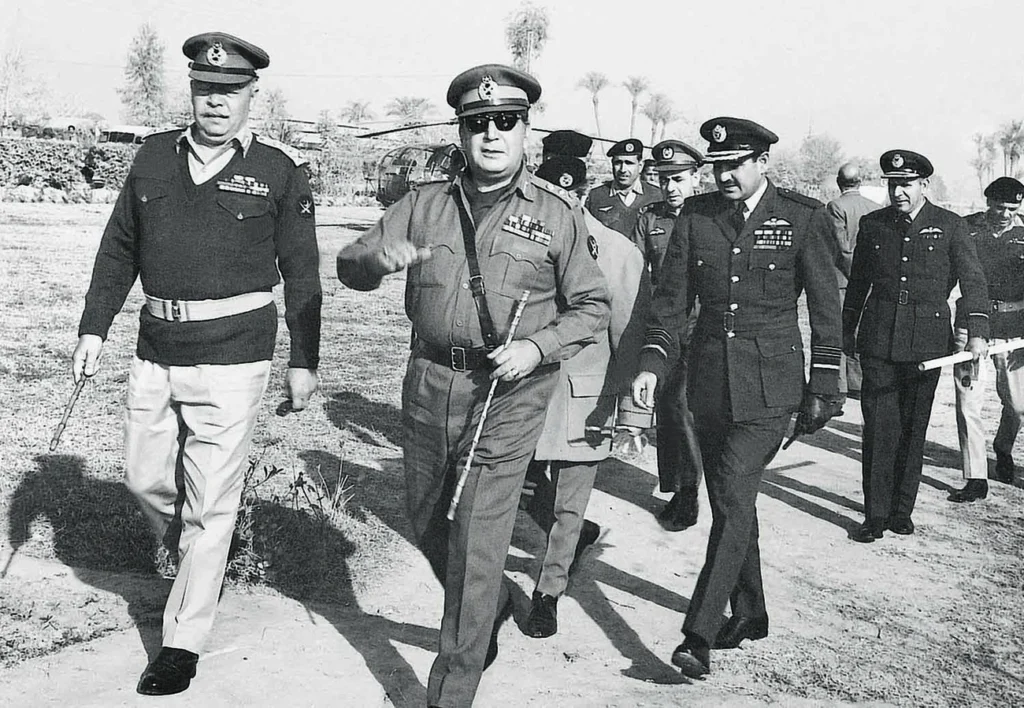
The Pakistani government’s relief response faced extensive criticism for its sluggish mobilization. President Yahya Khan required one week to declare the affected area a major calamity zone. In the ten and a half days following the cyclone, the central government assigned only one military transport aircraft and three crop-dusting aircraft to relief work. Political leaders termed the administration’s refusal to allocate additional helicopters as “shocking”. Ten days after the storm, international aid workers reported that government response in remote areas including Manpura, Hatiya, and Chittagong remained “still non-existent”. Relief supplies accumulated at Lahore airport while survivors waited, with 129 bales of clothes and blankets left stranded twelve days after the cyclone.
Lack of West Pakistani government involvement
President Yahya Khan flew over the affected delta in a Fokker Friendship aircraft, declared the damage exaggerated, and assigned a subordinate to direct relief efforts. Eleven East Pakistan politicians released a statement ten days after the storm charging the government with “gross neglect, callous indifference and utter indifference”. On November 19, students marched in Dhaka protesting the response speed, and on November 24, Maulana Abdul Hamid Khan Bhashani addressed a rally of 50,000 people demanding the president’s resignation.
International aid versus domestic response
More than two hundred relief planes landed at Dhaka airport from nearly half the countries of the world, whereas only one arrived from Pakistan. International relief operations proved “more responsive than the central government of Pakistan”. CARE halted aid shipments to East Pakistan the week after the cyclone because of unwillingness to let the Pakistani central government handle distribution.
How did Cyclone Bhola lead to Bangladesh’s independence?
Impact on the December 1970 elections
The cyclone made landfall four weeks before Pakistan’s first democratic elections in over 15 years, rendering the state’s inadequate response salient to East Pakistani voters. The disaster served as a catalytic focal point that intensified pro-secessionist voting patterns. A one standard deviation increase in storm intensity felt in a constituency corresponded with a 5 percentage point rise in vote share for the pro-independence Awami League. Left-wing parties boycotted the elections in protest of the government’s handling of relief operations, consequently allowing the Awami League to consolidate opposition support.
Rise of the Awami League
The Awami League captured 160 out of 162 National Assembly seats in East Pakistan, securing an average vote share of 75%. The party’s Six-Point Program advocated for greater provincial autonomy and control over regional resources. Statistical analysis revealed that constituencies experiencing greater storm intensity and weaker government relief delivered stronger electoral support for the Awami League. The USAID Mission Director termed the cyclone “the real reason for the final break”.
The March 1971 crackdown
On March 25, 1971, the Pakistan Army launched Operation Searchlight after the West Pakistani government refused to transfer power to the elected Awami League. The military operation aimed at suppressing Bengali independence movements through widespread violence against civilians.
Birth
Bangladesh achieved independence in December 1971 following the Liberation War.
Conclusion
In December 1970, the League of Red Cross Societies drafted a plan for immediate deployment should a comparable cyclone strike other disaster-prone countries. In the thirty years following the disaster, over 200 cyclone shelters were constructed in coastal regions of Bangladesh. These multipurpose disaster shelters demonstrated their effectiveness during Cyclone Mahasen in 2013, facilitating the evacuation of 1 million people within 24 hours, and again during Cyclone Mora in May 2017.
The establishment of the Cyclone Preparedness Program produced measurable results when the next major cyclone approached Bangladesh in 1991. Volunteers warned coastal populations two to three days before landfall. The 1991 cyclone killed over 138,000 people, significantly fewer fatalities than the 1970 storm, partly attributable to advance warnings issued by the preparedness system.
Bangladesh evolved into an international advocate for disaster risk reduction and resilience. World Bank-financed projects provided more than 2 million people access to disaster shelters. Since 1970, tropical cyclones have caused 1,942 disasters globally, resulting in 779,324 deaths and USD 1.407.6 trillion in economic losses. The WMO Tropical Cyclone Program contributed to dramatic advances in forecast accuracy and warning systems. Climate change, sea level rise, and urban expansion continue increasing vulnerability to tropical cyclones.
FAQs
Q1. What made the 1970 Bhola cyclone the deadliest tropical cyclone in recorded history? The Bhola cyclone claimed between 300,000 and 500,000 lives when it struck on November 12, 1970. The catastrophic death toll resulted primarily from a massive 35-foot storm surge that swept over the low-lying islands of the Ganges Delta, obliterating entire fishing communities and devastating coastal areas of East Pakistan (now Bangladesh) and India’s West Bengal.
Q2. Why is the exact death toll from Cyclone Bhola still uncertain? The precise number of fatalities remains unknown due to the absence of census records in the affected areas. Post-disaster studies excluded nearly 100,000 immigrant rice harvesters, and families that perished entirely went unaccounted for in official calculations. The lack of comprehensive documentation systems prevented accurate pre-cyclone population counts, making precise casualty verification impossible.
Q3. How did the Pakistani government’s response to the disaster contribute to political tensions? President Yahya Khan took one week to declare the area a major calamity zone and assigned only one military transport aircraft to relief work in the first ten days. More than 200 relief planes arrived from international sources while only one came from Pakistan. This inadequate response, termed “gross neglect” by East Pakistani politicians, intensified resentment and became a focal point in the upcoming elections.
Q4. What role did Cyclone Bhola play in Bangladesh’s path to independence? The cyclone struck four weeks before Pakistan’s first democratic elections, making the government’s inadequate response highly visible to voters. The Awami League, which advocated for independence, won 160 out of 162 seats in East Pakistan with 75% of the vote. When West Pakistan refused to transfer power to the elected government, it triggered events that led to the Liberation War and Bangladesh’s independence in December 1971.
Q5. What disaster preparedness improvements were made after Cyclone Bhola? In the thirty years following the disaster, over 200 cyclone shelters were constructed in coastal regions of Bangladesh. The Cyclone Preparedness Program was established to provide advance warnings, and volunteers successfully warned populations two to three days before the 1991 cyclone. These improvements helped reduce casualties significantly, with the 1991 cyclone resulting in 138,000 deaths compared to the 300,000-500,000 in 1970.
People Also Read: What Are Anime Terms? Essential Japanese Words for Fans