
Have you ever wondered why does Bolivia have two capitals? While most countries settle for a single capital city, Bolivia stands out with its unique dual-capital system. Sucre serves as the constitutional capital where Bolivia’s Declaration of Independence was signed on August 6, 1825, while La Paz functions as the administrative capital and seat of government.
This unusual arrangement stems from a turbulent history. When we look at Bolivia’s past, we discover that the country’s two capitals resulted from the Federal War of 1899, when the people of Sucre literally fought a civil war with La Paz to defend their status as the capital city. Despite this conflict, both cities maintained their importance in Bolivia’s governance. Interestingly, Bolivia is the only South American country with two capitals, with Sucre remaining the legal capital according to the 2009 Constitution, while La Paz, perched at an altitude exceeding 4,000 meters in its highest neighborhoods, hosts most government functions. Throughout this article, I’ll explore the fascinating historical events that created this distinctive political arrangement and what makes each of these Bolivian capitals special.
The origins of Bolivia’s two-capital system
Bolivia’s unique dual-capital system traces back to its complex colonial past. To understand this political arrangement, we need to examine the historical events that shaped the nation’s governance structure.
Colonial foundations and the rise of Sucre
The city now known as Sucre was founded in 1538 as “La Plata” by Spanish conquistadors. Initially, the city thrived as an administrative center for Spain’s colonial interests. Following independence in 1825, Sucre (renamed to honor revolutionary leader Antonio José de Sucre) became the new republic’s capital. The city gained further prestige when Bolivia’s first university, Universidad Mayor Real y Pontificia de San Francisco Xavier, was established there in 1624. As Bolivia’s intellectual center, Sucre naturally evolved into the home for the country’s judiciary and constitutional powers.
The role of mining in shaping regional power
The discovery of vast silver deposits in Potosí and later tin reserves near La Paz fundamentally altered Bolivia’s power dynamics. Throughout the 19th century, La Paz grew steadily in economic and political influence. The mining industry attracted foreign investment, fueled population growth, and shifted economic power northward. Meanwhile, Sucre’s economy remained more traditional, creating a growing rivalry between the conservative south and the liberal, economically booming north. This economic disparity laid the groundwork for the political conflict that would eventually split the capital functions.
The Federal War of 1899 and its aftermath
The breaking point came in 1899 with what Bolivians call the “Guerra Federal” (Federal War). This bloody civil conflict erupted after the Conservative government in Sucre attempted to maintain centralized control. The Liberal Party, based in La Paz, advocated for a federal system that would give regions more autonomy. After three months of fighting, the Liberal forces prevailed. Rather than completely stripping Sucre of its capital status, a compromise was reached: Sucre would remain the constitutional and judicial capital, while La Paz would serve as the seat of government, housing the executive and legislative branches. This arrangement has persisted for over 120 years, creating Bolivia’s distinctive dual-capital system.
Read other Articles – Is Your Child Safe Under Dental Anesthesia? A Parent’s Essential Guide
Sucre: Bolivia’s constitutional and judicial capital
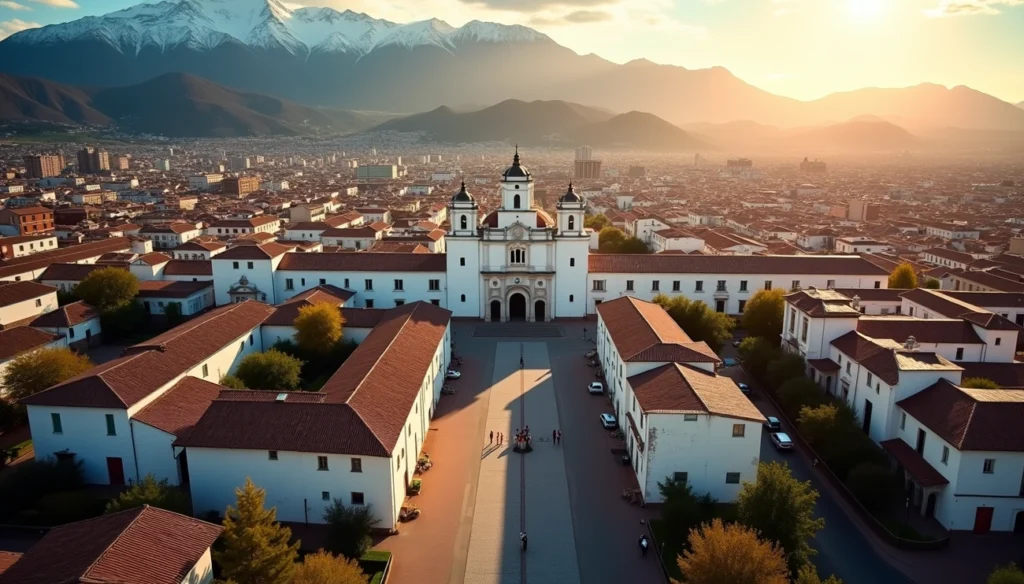
Stepping into Sucre feels like traveling back in time. With its pristine white colonial buildings and tranquil atmosphere, it’s easy to understand why this elegant city maintains its status as Bolivia’s constitutional capital.
Why Sucre is still the official capital
Officially, Sucre remains Bolivia’s constitutional capital according to the country’s 2009 Constitution. Although La Paz functions as the administrative capital housing most government operations, Sucre holds the constitutional distinction that has never been formally revoked. This unique arrangement resulted from a political compromise following the Federal War, as neither region was willing to completely surrender capital status.
Sucre holds immense historical significance as the birthplace of Bolivia’s independence. I find it fascinating that the House of Freedom (Casa de la Libertad), where the Bolivian Declaration of Independence was signed in 1825, still stands as a testament to the city’s pivotal role in the country’s founding. The city’s constitutional status also serves as an acknowledgment of its historical importance and helps maintain a power balance between Bolivia’s diverse regions.
The Supreme Court and legal institutions
Sucre serves as Bolivia’s judicial heart. The Supreme Court of Justice (Corte Suprema de Justicia) operates from here, making it the center of the country’s legal system. The Constitutional Court, which interprets the constitution and ensures laws conform to it, also calls Sucre home.
The city’s legal tradition extends to education as well. The University of San Francisco Xavier, founded in 1624, houses Bolivia’s most prestigious law school. For centuries, Sucre has produced the nation’s top legal scholars and judiciary figures, cementing its reputation as the intellectual and judicial cornerstone of Bolivia.
Cultural heritage and historical landmarks
Beyond its political significance, Sucre boasts remarkable cultural heritage. The city earned UNESCO World Heritage status in 1991 for its well-preserved colonial architecture. As you wander through its streets, you’ll notice the distinctive white-painted buildings that give Sucre its nickname “La Ciudad Blanca” (The White City).
Among its most notable landmarks is the Metropolitan Cathedral, an architectural masterpiece dating back to the 16th century. Additionally, the General Cemetery with its elaborate mausoleums offers a unique glimpse into Bolivian history and culture.
Sucre’s museums, particularly the Museum of Indigenous Art (ASUR), showcase Bolivia’s rich indigenous heritage through textiles and artifacts. Indeed, the city provides visitors with both a political education and cultural immersion unlike anywhere else in the country.
La Paz: The administrative and political powerhouse

Image Source: iStock
Perched dramatically in a canyon of the Andes Mountains, La Paz presents a striking contrast to Sucre’s colonial elegance. At over 3,650 meters above sea level, it stands as the world’s highest seat of government.
How La Paz became the seat of government
In 1898, La Paz officially became Bolivia’s de facto seat of government. This shift reflected the changing economic landscape as Bolivia’s focus moved from Potosí’s depleted silver mines to tin exploitation near Oruro. La Paz’s strategic location near mining regions and commercial routes to Peru and Chile made it an economic powerhouse, consequently becoming the practical choice for governmental operations.
Economic growth and urban development
Nowadays, La Paz generates 24% of Bolivia’s gross domestic product. Originally founded in 1548 as Nuestra Señora de La Paz by Captain Alonso de Mendoza, the city has evolved into Bolivia’s political and economic heart. Moreover, the La Paz-El Alto metropolitan area houses nearly two million people and continues to experience rapid growth.
Mi Teleférico and modern infrastructure
Perhaps La Paz’s most remarkable feature is Mi Teleférico, the world’s largest urban cable car network. This revolutionary transportation system connects La Paz with El Alto, reducing commute times dramatically for 440,000 daily travelers between the cities. Notably, Mi Teleférico transports approximately 243,000 passengers daily and has become financially self-sustaining, reporting an operating surplus of $5.8 million in 2018.
Why most embassies and ministries are in La Paz
Currently, La Paz hosts 35 embassies, essentially functioning as the diplomatic center of Bolivia. The Plaza Murillo serves as the heart of the city and houses the government and legislative palaces. Furthermore, most international flights, political events, and government services operate from La Paz, reinforcing its status as the country’s administrative capital.
Read other Articles – ISO Certification in Nigeria: Step-by-Step Process for Business Owners
Why Bolivia still maintains two capitals

Image Source: Uros Expeditions
The unique dual-capital arrangement persists in Bolivia primarily as a careful balancing act between regional powers and identities.
Balancing regional power and identity
Throughout Bolivia’s history, the division between La Paz (representing the western highlands) and the eastern lowlands has created a fundamental geographic, political, and economic divide. This split has defined Bolivian politics for decades, with Santa Cruz consistently pushing for greater decentralization. The two-capital system helps maintain equilibrium between these competing regional interests.
Political tensions and constitutional debates
In 2007, Sucre launched a campaign to reclaim its full capital status, prompting approximately one million La Paz citizens to march in protest. Sucre responded with street demonstrations and hunger strikes. The 2009 Constitution officially reaffirmed “Sucre is the capital city of Bolivia” but was approved by a narrow margin—just over 50% of voters—with only four of Bolivia’s nine states supporting it.
Comparing Sucre and La Paz for travelers
Both cities offer contrasting experiences: Sucre provides calm, history, and colonial elegance, while La Paz delivers political intensity and urban energy. The population density difference is striking—La Paz: 1861/km² versus Sucre: 170/km²—as is the elevation difference (La Paz: 3640m, Sucre: 2810m).
Which South American country has two capitals?
Bolivia stands alone in South America with its dual-capital system, though countries like South Africa and the Netherlands similarly separate constitutional and administrative capitals.
Conclusion
Bolivia’s dual-capital system stands as a testament to the country’s complex historical journey and regional diversity. The compromise reached after the Federal War of 1899 has certainly created a political arrangement unlike any other in South America. This unique solution reflects the deep-rooted tensions between Bolivia’s highland and lowland regions, while also honoring both the historical significance of Sucre and the economic importance of La Paz.
Though seemingly complicated at first glance, this arrangement actually provides Bolivia with an effective balance of power. Sucre maintains its status as the constitutional and judicial heart, preserving the nation’s historical legacy through its colonial architecture and significant landmarks. La Paz, meanwhile, drives the country forward as its administrative powerhouse, hosting government ministries, foreign embassies, and major economic activities.
Regional identity plays a crucial role in maintaining this dual-capital status. The ongoing debates and occasional tensions surrounding the capital issue underscore how deeply Bolivians connect their regional identity with political representation. This dynamic continues to shape Bolivian politics today, as evidenced by the narrow passage of the 2009 Constitution and subsequent protests.
For travelers like me, these two capitals offer distinctly different experiences. Sucre charms visitors with its UNESCO-recognized colonial buildings and relaxed atmosphere, while La Paz impresses with its dramatic mountain setting and innovative urban solutions like the Mi Teleférico cable car system. Together, they showcase two complementary facets of Bolivia’s national character.
Bolivia’s two-capital arrangement might seem unusual compared to other countries worldwide, yet it perfectly embodies the nation’s commitment to balancing historical tradition with practical governance. Despite occasional challenges to this system, it has endured for over 120 years, proving its resilience and effectiveness for Bolivia’s unique circumstances.
FAQs
Q1. Why does Bolivia have two capital cities? Bolivia has two capitals due to historical and political reasons. Sucre is the constitutional capital and home to the judiciary, while La Paz serves as the administrative capital where the executive and legislative branches operate. This arrangement resulted from a compromise following the Federal War of 1899.
Q2. What are the main differences between Sucre and La Paz? Sucre is known for its colonial architecture, historical significance, and calmer atmosphere. It houses the Supreme Court and is the constitutional capital. La Paz, on the other hand, is the bustling administrative capital, home to most government functions, and features modern infrastructure like the Mi Teleférico cable car system.
Q3. Is Sucre or La Paz considered the true capital of Bolivia? Officially, Sucre is recognized as the constitutional capital of Bolivia. However, La Paz functions as the seat of government and is often referred to as the de facto capital. Both cities play crucial roles in the country’s governance, making Bolivia unique with its dual-capital system.
Q4. How does the dual-capital system affect Bolivia’s politics and economy? The dual-capital system helps balance regional powers and identities in Bolivia. It acknowledges the historical importance of Sucre while recognizing La Paz’s economic significance. This arrangement has led to ongoing debates and occasional tensions but has generally provided a stable compromise for over 120 years.
Q5. What can tourists expect when visiting Bolivia’s two capitals? Visitors to Sucre can explore well-preserved colonial architecture, historical landmarks, and cultural museums in a relaxed setting. La Paz offers a more urban experience with its modern infrastructure, vibrant markets, and stunning Andean backdrop. Both cities provide unique insights into Bolivia’s diverse culture and political landscape.
Disclaimer
This article contains general information about Bolivia’s capital cities. Political situations and administrative arrangements may change over time. Travelers should always check current information before planning visits.
Interested in similar content or opportunities. Contact Us