
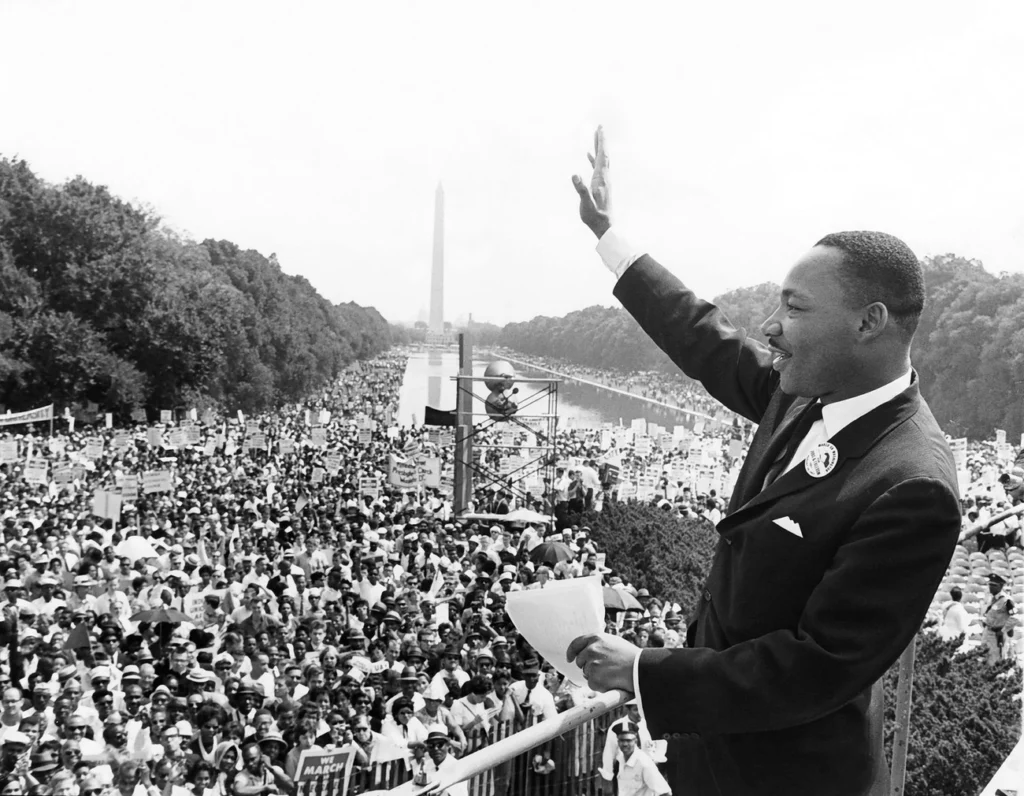

The “I Have a Dream speech” was ranked the top American speech of the 20th century in a 1999 poll of scholars of public address. Delivered on August 28, 1963, Martin Luther King Jr. stood before over 250,000 civil rights supporters at the Lincoln Memorial in Washington, D.C., to deliver words that would echo through history. The speech’s power and significance earned it a place in the Library of Congress National Recording Registry in 2002 and recognition by Time as one of the 10 greatest orations in history. In this article, we’ll explore the I Have a Dream speech text in its entirety, examine when and how the speech came together, discover who wrote the I Have a Dream speech, and understand why these historic words continue to resonate today.
When Was the I Have a Dream Speech Delivered
The March on Washington for Jobs and Freedom
On August 28, 1963, Martin Luther King Jr. delivered the I Have a Dream speech during the March on Washington for Jobs and Freedom. This planned, peaceful demonstration brought together several civil rights organizations and grassroots activists who had been fighting for equality through boycotts and marches. The march was organized in less than 3 months, a remarkable feat given its eventual scale.
The stated goals extended beyond general civil rights advocacy. Organizers pushed for a comprehensive civil rights bill to eliminate segregated public accommodations, protection of voting rights, mechanisms for addressing constitutional rights violations, desegregation of all public schools in 1963, a massive federal works program to train and place unemployed workers, and a Federal Fair Employment Practices Act barring discrimination in all employment. The march was partly intended to demonstrate mass support for civil rights legislation proposed by President John F. Kennedy in June.
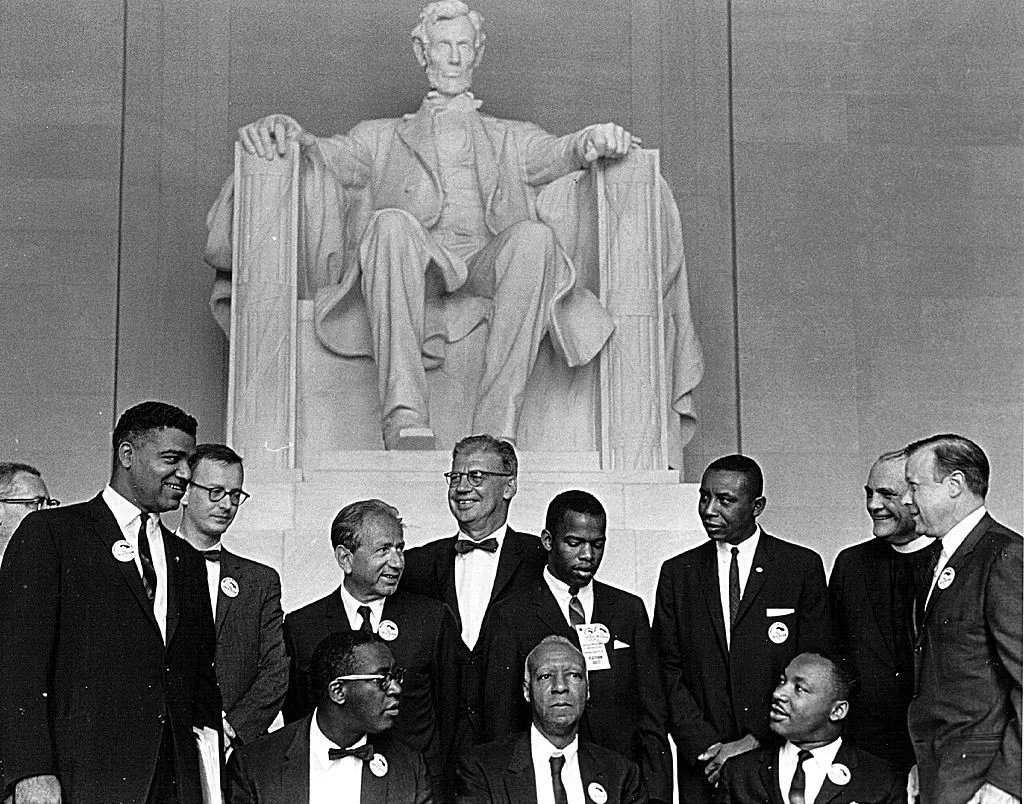
Location at the Lincoln Memorial
King stood on the steps of the Lincoln Memorial to deliver his address. The march began at the Washington Monument and progressed to the Lincoln Memorial, with the crowd stretching from the Lincoln Memorial, past the Reflecting Pool and toward the Washington Monument. King was the sixteenth out of eighteen people to speak that day, according to the official program, making him the event’s final official speaker.
Audience size and composition
More than 2,000 busses, 21 chartered trains, 10 chartered airliners, and uncounted cars converged on Washington. Estimates of attendance varied among different organizations. The National Park Service reported an estimated 250,000 people, while the NAACP said the rally drew over 260,000 people from across the nation. Meanwhile, the Martin Luther King, Jr. Research and Education Institute at Stanford University published the number of more than 200,000 demonstrators.
The crowd’s composition reflected the march’s broad appeal. Observers estimated that 75-80% of the marchers were Black. Rustin had indicated that they expected over 100,000 people to attend, but the final estimate was 250,000, including 190,000 Blacks and 60,000 whites. More than 3,000 members of the press covered this historic march.
Who Wrote I Have a Dream Speech
Martin Luther King Jr.’s preparation process
King wanted his address to match the impact of Lincoln’s Gettysburg Address. However, the night before the march, he still lacked a complete draft. King gathered his advisors in the Willard Hotel lobby, where everyone had different suggestions. Some wanted him to discuss jobs, others housing discrimination. After listening to the vigorous debate, King told his team, “I am now going upstairs to my room to counsel with my Lord”.
He worked through the night, writing in longhand. Andrew Young stopped by and noticed King had crossed out words three and four times, as if writing poetry. King recalled that he didn’t finish the complete text until 3:30 A.M. on the morning of August 28.
Contributions from advisors and writers
Clarence Jones served as King’s legal counsel, strategic advisor, and draft speechwriter from 1960 until King’s assassination. Jones is credited with writing the first seven paragraphs of the speech. He offered the “promissory note” metaphor for unfulfilled constitutional rights, which King incorporated: “America has defaulted on this promissory note insofar as her citizens of color are concerned”.
Stanley Levison, another close advisor, met with King regularly in early July to draft a framework for the speech. Other advisors who contributed included Alfred A. Duckett, who provided support on the I Have a Dream speech.
Earlier versions and practice speeches
King had used the “I have a dream” refrain before. He first delivered it at a high school gymnasium in Rocky Mount, North Carolina, on November 27, 1962, nine months before the March on Washington. He used it again in Detroit on June 23, 1963.
The improvised ‘I Have a Dream’ section
Despite these earlier uses, King’s advisors told him not to use the dream section again. They thought it was “too cliché” and overused. The prepared speech, titled “Normalcy, Never Again,” didn’t include those words.
King delivered the first part of his written text as planned. Then Mahalia Jackson, the gospel singer sitting nearby, called out: “Tell them about the dream, Martin!”. King set aside his prepared text. The next words he spoke were unscripted: “I have a dream”. He later recalled: “I just felt that I wanted to use it here… at that point I just turned aside from the manuscript altogether”.
I Have a Dream Full Speech Transcript
“I have a dream that my four little children will one day live in a nation where they will not be judged by the color of their skin but by the content of their character.” — Martin Luther King Jr., Civil Rights Leader, Nobel Peace Prize Laureate, delivered the I Have a Dream speech
Below is the complete i have a dream speech text, organized by its major thematic sections.
Opening: Five score years ago
King began with a deliberate echo of Lincoln’s Gettysburg Address: “Five score years ago, a great American, in whose symbolic shadow we stand today, signed the Emancipation Proclamation”. He acknowledged that this decree “came as a great beacon light of hope to millions of Negro slaves”. Yet he confronted the audience with stark reality: “But one hundred years later, the Negro still is not free”.
The promissory note metaphor
King framed America’s founding documents as an uncashed check: “When the architects of our republic wrote the magnificent words of the Constitution and the Declaration of Independence, they were signing a promissory note to which every American was to fall heir”. He declared that “America has given the Negro people a bad check which has come back marked ‘insufficient funds'”.
Now is the time
King repeated “Now is the time” four times, urging immediate action: “Now is the time to rise from the dark and desolate valley of segregation to the sunlit path of racial justice”.
The dream sequences
The famous refrain appeared eight times. King declared: “I have a dream that my four little children will one day live in a nation where they will not be judged by the color of their skin but by the content of their character”.
Let freedom ring
He called for freedom to ring “from every mountainside”, naming specific locations from New Hampshire to Mississippi.
Final words: Free at last
King concluded with the words of an old Negro spiritual: “Free at last! Free at last! Thank God Almighty, we are free at last!”.
The Legacy and Impact of MLK’s Historic Words
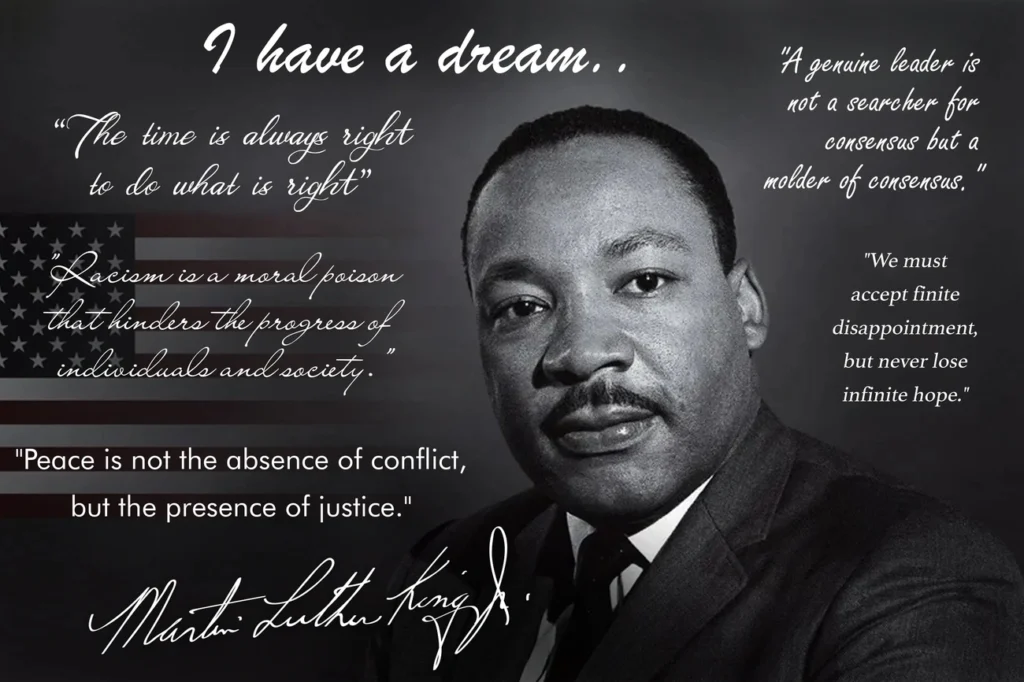
“There will be neither rest nor tranquility in America until the Negro is granted his citizenship rights.” — Martin Luther King Jr., Civil Rights Leader, Nobel Peace Prize Laureate, delivered the I Have a Dream speech
### Immediate reactions and media coverage
The liberal press praised the speech immediately. One New York Times commentator wrote that “Dr King touched all the themes of the day, only better than anybody else”. However, southern newspapers offered faint praise at best. The FBI’s assistant director, William Sullivan, prepared a memorandum calling it a “powerful demagogic speech” and declaring King “the most dangerous and effective Negro leader in the country”.
Television and radio brought the speech into American homes. By 1963, 91% of American households owned a television set. NBC, CBS, and ABC provided live coverage throughout the day. The Educational Radio Network broadcast an all-day event for the first time.
Influence on the Civil Rights Act
President Kennedy had announced his civil rights bill on June 11, 1963. King advocated for its passage, writing that the march participants “summed up everything in a word—NOW”. The bill remained pending when Kennedy was assassinated in November 1963.
President Lyndon Johnson continued pushing the legislation. After a 75-day Senate filibuster by southern senators, Johnson signed the Civil Rights Act into law on July 2, 1964, with King and other civil rights leaders present. The speech is believed to have helped secure the act’s passage.
Cultural and historical significance
The speech strengthened mainstream consensus against segregation. Yet it didn’t usher in any utopia. On September 15, a bomb ripped through Birmingham’s 16th Street Baptist Church, killing four Black girls.
The speech has left an ambiguous legacy. American conservatives cite King’s line about judging people by “content of their character” to support calls for ending affirmative action. Some have willfully distorted King’s words, claiming his dream endorsed a “colorblind” society while cherrypicking that sentence and ignoring his promissory note metaphor.
The speech in modern times
Most U.S. adults (81%) say Martin Luther King Jr. has had a positive impact on the country, with 47% saying he had a very positive impact. Among Black Americans, 59% say King’s legacy has influenced their views on racial equality a great deal or a fair amount.
In fact, many note that King’s legacy has been whitewashed. The one-dimensional Martin Luther King Jr. celebrated today is not the man once thought of “as the most dangerous man in America”. King himself later said he needed to confess that the dream “had at many points turned into a nightmare”. By 1967, he came to see that “some of the old optimism was a little superficial”.
Conclusion
King’s words, crafted in a late-night hotel room and partly improvised on the Lincoln Memorial steps, continue to challenge us decades later. Indeed, the speech’s legacy reminds us that progress requires both powerful vision and persistent action. While some have distorted his message, the full text reveals a more complex call to justice. We encourage you to read the complete speech and understand King’s actual words, not just the soundbites history has preserved.
FAQs
Q1. When and where did Martin Luther King Jr. deliver the “I Have a Dream” speech? Martin Luther King Jr. delivered the speech on August 28, 1963, at the Lincoln Memorial in Washington, D.C., during the March on Washington for Jobs and Freedom. He spoke before an estimated 250,000 civil rights supporters who had gathered from across the nation.
Q2. Did Martin Luther King Jr. write the entire “I Have a Dream” speech himself? King wrote most of the speech himself, working through the night until 3:30 A.M. on the morning of the march. However, he received contributions from advisors like Clarence Jones, who wrote the first seven paragraphs and suggested the “promissory note” metaphor. The famous “I have a dream” section was actually improvised during the speech after gospel singer Mahalia Jackson encouraged him to share it.
Q3. What is the main message of the “I Have a Dream” speech? The speech calls for racial equality and justice in America. King used the metaphor of an uncashed promissory note to describe how America had failed to fulfill its constitutional promises to Black citizens. He envisioned a future where his children would be judged by the content of their character rather than the color of their skin.
Q4. How did the “I Have a Dream” speech impact the Civil Rights Movement? The speech helped strengthen mainstream consensus against segregation and is believed to have contributed to the passage of the Civil Rights Act of 1964. It brought national attention to the civil rights cause through extensive television and radio coverage, reaching millions of American households and creating momentum for legislative change.
Q5. Why is the “I Have a Dream” speech still significant today? The speech remains one of the most influential orations in American history, ranked as the top American speech of the 20th century. It continues to inspire discussions about racial equality and justice, though some note that King’s message has been simplified or distorted over time. The speech challenges us to continue working toward the vision of equality King articulated.
People Also Read: What Are Anime Terms? Essential Japanese Words for Fans