
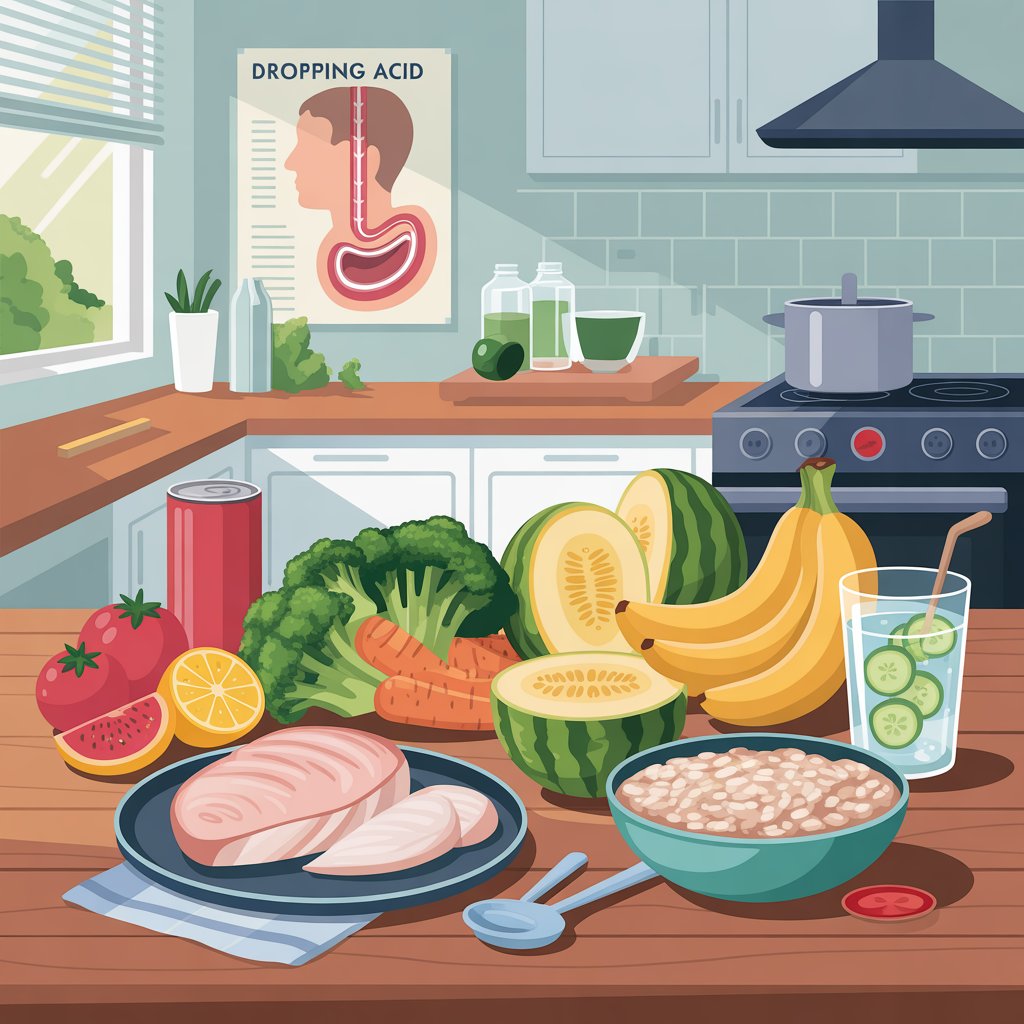

The Dropping Acid Diet is a structured, low‑acid, low‑fat eating plan created to calm acid reflux—especially “silent reflux”—by changing not just what you eat, but how and when you eat. It was developed by Dr. Jamie Koufman and colleagues to help patients whose reflux symptoms were not improving on medication alone, and it has since become one of the best‑known food‑first approaches to reflux.
1. What Is the Dropping Acid Diet?
The Dropping Acid Diet comes from the book “Dropping Acid: The Reflux Diet Cookbook & Cure,” which combines medical guidance with cook‑book style recipes and practical lists of “best” and “worst” foods for reflux. Its core promise is that, by removing strongly acidic and high‑fat foods for a set period and then reintroducing safer options, you can significantly reduce reflux, protect the throat, and in some cases avoid long‑term dependence on drugs like proton‑pump inhibitors (PPIs).
Unlike generic GERD diets that focus mostly on heartburn, this plan is particularly targeted at laryngopharyngeal reflux (LPR)—sometimes called “silent reflux”—where stomach contents reach the throat and voice box. People with LPR often have symptoms like hoarseness, chronic cough, throat clearing, or a lump‑in‑the‑throat sensation rather than typical burning in the chest. Because these symptoms are subtle and easily misdiagnosed, many patients arrive at the Dropping Acid Diet after years of trial‑and‑error with medications and ordinary “acidity” advice.
You can see the original book and description of its approach here
2. The Science Behind a Low‑Acid, Low‑Fat Approach
To understand the Dropping Acid Diet, it helps to know what is actually going wrong in reflux. Normally, a muscular valve called the lower esophageal sphincter (LES) separates your esophagus from your stomach and opens only when food needs to pass downward. When this valve weakens or relaxes at the wrong time—or when pressure in the stomach is too high—acidic contents can splash upward, irritating the esophagus and even the throat.
Dr. Koufman’s work highlights two main factors you can control with diet: the acidity of what you consume and the fat load of your meals. Acidic foods and drinks add more acid to what can be refluxed; fatty meals slow stomach emptying and relax the LES, increasing the risk that reflux will occur and linger. In a prospective study of patients with stubborn, PPI‑resistant LPR, Koufman placed subjects on a strict low‑acid diet that eliminated all foods and beverages below pH 5 for at least two weeks. At the end, 95% of patients improved; symptom scores and laryngeal findings both showed statistically significant reductions, even though these patients had already failed “maximum” anti‑reflux drug therapy.
This research supports the idea that dietary acid restriction is not just a side note but a central therapeutic tool for reflux, especially when medications alone are not working. Later work and clinical protocols expanded this into a multi‑phase reflux plan that combines low acid, low fat, and a set of lifestyle rules such as avoiding late‑night eating and large meals.
3. The Three Phases of the Dropping Acid Diet
Over time, Dr. Koufman has described the reflux diet in distinct phases—often named detox (or induction), transition, and maintenance—each with clear rules on what you can and cannot eat.
3.1 Detox / Induction Phase
The detox or induction phase is the strictest part of the plan and usually lasts about two weeks, though clinicians may adjust this based on symptom severity. During this period:
- You avoid all foods and drinks with a pH below 5, essentially cutting out most acidic items such as citrus, tomato products, sodas, and many bottled dressings.
- You eat 3–5 modest meals per day, rather than large plates, to keep stomach volume and pressure low.
- You stop eating at least three hours before lying down, and you drink at least eight cups of non‑carbonated water daily.
- For fruit, only bananas and melons are usually allowed, and these are chosen for their relatively gentle pH.
The goal in this phase is to give the irritated tissues in your throat and esophagus a clean break from ongoing acid exposure so that healing can begin. Many people notice that chronic throat clearing, coughing, and hoarseness already start to ease during this initial period.
3.2 Transition Phase
After the strict two‑week window, the diet shifts into a transition phase in which you can slowly broaden your menu while keeping the basic rules in place. In this stage:
- The focus remains on foods above pH 5, but you may cautiously add certain slightly more acidic items, one at a time, while watching for symptoms.
- Known reflux triggers such as fried foods, chocolate, caffeine, alcohol, and mint are still limited or avoided.
- The eating schedule (smaller, earlier meals, no late‑night snacking) and hydration rules continue.
The transition phase is where you discover your personal triggers, because not everyone reacts to the same foods in the same way. For one person, a small amount of tomato may be fine, while another might get symptoms from even a mild citrus‑free sauce; careful self‑monitoring here determines your long‑term plan.
3.3 Maintenance Phase
The maintenance phase is the long‑term lifestyle version of the Dropping Acid Diet, tailored to your own tolerance and preferences. Once your symptoms are largely under control:
- Your menu is still relatively low in acid and fat, but you may enjoy small amounts of previously restricted items that you have tested successfully.
- You continue to use fats as flavorings rather than main ingredients and maintain an emphasis on whole foods, lean proteins, and low‑acid fruits and vegetables.
- If you experience flare‑ups—for example during holidays or travel—you can temporarily “return” to detox rules for a week or two to calm things down again.
For a clinician‑level explanation of these phases and pH measurements of common fruits and vegetables, you can review Dr. Koufman’s overview here
4. Foods to Avoid on the Dropping Acid Diet
While every person’s list is slightly different, the Dropping Acid Diet highlights several categories of foods that tend to cause trouble for refluxers. During detox, many of these are strictly off‑limits; later, some may appear in small amounts, depending on your symptoms.
4.1 High‑Acid Foods (Below pH 5)
These foods add direct acid load to what can splash back up into the esophagus and throat.
- Citrus fruits and juices (oranges, lemons, limes, grapefruits)
- Tomato products (sauce, paste, ketchup, salsa, many canned tomato soups)
- Many bottled salad dressings and pickled products with heavy vinegar
- Cranberries and cranberry juice
- Some grapes, pineapples, pomegranates, and berries (especially in large quantities)
The diet is not inherently “anti‑fruit,” but it asks you to be selective and to prefer fruits with a higher pH (lower acidity), especially at the beginning.
4.2 High‑Fat and Fried Foods
Fat slows stomach emptying, promotes LES relaxation, and tends to fuel reflux episodes.
- Deep‑fried foods (French fries, fried chicken, battered snacks)
- Fatty cuts of red meat and processed meats such as bacon, sausage, and salami
- Heavy cream sauces, Alfredo‑style dishes, and high‑fat cheese in large portions
- Full‑fat dairy like whole milk and full‑fat yogurt (small amounts may be tolerated in maintenance)
The Dropping Acid approach typically does not remove fat entirely, but encourages you to use small amounts of quality fats—like olive oil or a bit of butter—as flavor accents.
4.3 Classic Reflux Triggers
Beyond acid and fat content, some foods are known to weaken the LES or irritate sensitive tissues.
- Chocolate (contains both fat and methylxanthines that relax the LES)
- Peppermint and spearmint, including candies and teas
- Caffeine (coffee, strong black tea, energy drinks)
- Alcohol of all types, especially in the evening
- Very spicy seasoning blends, hot chili sauces, and heavily peppered dishes
- Onions and garlic in large amounts, particularly raw
Not every person reacts to every item in this list, but the diet recommends avoiding them during detox to give you a clear baseline.
4.4 Late‑Night Eating and Large Meals
What you eat matters, but when you eat also has a big impact on reflux. Large meals and eating close to bedtime both increase the likelihood that stomach contents will move upward rather than downward.
Typical Dropping Acid rules include:
- No food within 3 hours of lying down or going to sleep
- No heavy meals right before intense exercise
- Preference for moderate portions divided into 3–5 meals per day
For a more general GERD‑oriented view of what foods and habits tend to drive reflux, including overlapping advice on triggers and meal timing, see
5. Foods to Emphasize: What You Can Eat
One reason the Dropping Acid Diet has been popular is that it’s not just a list of “don’ts”—the original book includes many recipes and clear “yes” lists to build a satisfying menu. A summary of allowed and restricted choices highlights how flexible the plan can be once you understand its logic.
5.1 Lean Proteins
Protein is central for satiety, tissue repair, and blood sugar balance, but it should be delivered with minimal fat.
- Skinless poultry such as chicken breast and turkey breast (preferably grilled, baked, poached, or roasted)
- Fish and seafood (non‑fried) such as white fish, salmon in moderate portions, and shellfish
- Plant proteins including tofu, tempeh, beans, lentils, and split peas, as tolerated
- Egg whites; small amounts of whole egg may be acceptable in maintenance, used sparingly
These proteins are used in combination with grains and vegetables to build filling meals without triggering reflux.
5.2 Whole Grains and Complex Carbohydrates
Complex carbohydrates help form the backbone of many reflux‑friendly meals, providing energy and fiber while being gentle on the stomach.
- Oatmeal and other whole‑grain breakfast cereals
- Brown rice, couscous, polenta, and quinoa
- Whole‑grain bread, pitas, and tortillas, plus low‑fat muffins (non‑citrus)
- Plain popcorn (air‑popped or lightly salted) without butter
Chewfo’s detailed summary of Dropping Acid foods notes that grains like rice and whole‑grain breads are staple items during the induction phase, precisely because they are filling and non‑acidic.
5.3 Low‑Acid Fruits and Vegetables
Plant foods are heavily encouraged, but again, acidity matters.
- Fruits: bananas, melons (honeydew, cantaloupe, watermelon), some red apples (Fuji, Gala, Red Delicious) in limited quantities, and certain berries in moderation if tolerated
- Vegetables: broccoli, cauliflower, green beans, asparagus, carrots, fennel, mushrooms, turnips, and potatoes and root vegetables (except onions)
- Leafy greens and salad vegetables, dressed with non‑acidic or lightly acidic dressings in small amounts
These choices provide vitamins, minerals, and antioxidants without massively increasing acid load.
5.4 Healthy Fats and Condiments (In Moderation)
Rather than eliminating fat, the plan reframes it as a seasoning.
- Small amounts of olive oil, other plant oils, or butter for cooking or finishing dishes
- Limited quantities of cheese such as Parmesan or sharp cheddar, mainly as a garnish
- Mild condiments and low‑acid dressings used sparingly, along with herbs like parsley and mild spices
The idea is to keep overall fat low in each meal while still making food enjoyable and sustainable in the long term.
5.5 Beverages That Go Easy on Your Throat
Hydration is essential, but not all drinks are equal for reflux.
- Still water (plain or infused with non‑acidic flavors like cucumber)
- Non‑citrus herbal teas such as chamomile or ginger, cooled slightly rather than very hot
- Low‑fat or non‑dairy milk alternatives if tolerated, avoiding heavy chocolate or coffee flavorings
The plan discourages carbonation, strong coffee, and most sodas, especially during the first few weeks.
For a user‑friendly breakdown of common Dropping Acid “yes” and “no” foods—including specific fruits, vegetables, grains, and dairy options—you can consult this summary
6. A Sample One‑Day Dropping Acid Meal Plan
To see how the principles look in real life, here is an example day based on the induction/early‑transition approach described in Dropping Acid resources. Portions and choices can be tailored to your calorie needs and food preferences.
Breakfast
- Oatmeal cooked in water or low‑fat milk alternative, topped with sliced banana and a sprinkle of cinnamon
- A small serving of plain yogurt if tolerated (non‑fat or low‑fat), with no citrus fruits added
- Herbal tea such as chamomile or a glass of water
This breakfast keeps fat low, avoids acidic fruits and juices, and provides fiber and complex carbohydrates for sustained energy.
Mid‑Morning Snack
- A small bowl of melon cubes (honeydew or cantaloupe)
- A handful of plain, air‑popped popcorn or a few whole‑grain crackers
This combination delivers hydration, gentle fruit, and a bit of crunch without relying on acid or heavy fat.
Lunch
- Grilled skinless chicken breast served with brown rice and steamed broccoli and carrots
- A side salad of mixed greens dressed with a small amount of olive oil and herbs (avoiding vinegar‑heavy dressings)
- Water or mild herbal tea
Here, lean protein plus low‑acid vegetables and whole grains form a filling yet reflux‑friendly plate.
Afternoon Snack
- A red apple (such as Gala or Fuji), if you tolerate it well, or an extra serving of melon
- A small handful of lightly toasted unsalted nuts, if fat tolerance is good
Apples are introduced cautiously and in limited weekly amounts in many Dropping Acid lists; if they bother you, stick with bananas and melons.
Dinner (3–4 hours before bed)
- Baked white fish (e.g., cod) with herbs and a drizzle of olive oil
- Roasted potatoes and green beans
- A simple side of sautéed mushrooms and fennel in a minimal amount of oil
- Water, stopping all drinks at least an hour before sleep if nighttime reflux is severe
This dinner maintains low acidity and moderate fat, while providing substantial protein and fiber to keep you satisfied through the evening.
Evening
- No food in the final three hours before bed
- Optional: an additional glass of water earlier in the evening if needed
Sticking to these patterns for at least two weeks forms the baseline from which you can later experiment with more variety.
7. Lifestyle Habits That Support the Dropping Acid Diet
Dietary choices are the foundation, but lifestyle details around posture, sleep, and weight also influence how well your reflux is controlled.
Key supportive habits include:
- Meal timing: Finish your last meal at least three hours before lying down so the stomach has time to empty.
- Body position: Elevate the head of your bed slightly or use a wedge pillow to keep acid from traveling upward while you sleep.
- Weight management: Extra abdominal weight increases pressure in the stomach and can worsen reflux, so the whole‑food, lower‑fat structure of the Dropping Acid Diet can also be used as a gentle weight‑management tool.
- Stress management: Stress does not directly cause reflux, but it can worsen perception of symptoms and encourage habits like overeating, late‑night snacking, or excessive caffeine intake.
- Smoking cessation: If you smoke, quitting is strongly recommended, as smoking weakens the LES and irritates the airways.
Many general GERD guides echo these same lifestyle strategies, showing how the Dropping Acid Diet fits into a wider medical consensus about reflux management.
8. Benefits, Limitations, and When to See a Doctor
8.1 Potential Benefits
For many people with GERD or LPR, the Dropping Acid Diet provides several meaningful benefits:
- Symptom relief: Studies and clinical reports show improvements in cough, throat clearing, hoarseness, and typical heartburn when people adhere to a low‑acid, low‑fat protocol.
- Reduced medication dependence: Because the diet targets the underlying exposure of tissues to acid, some individuals can lower their dose or even discontinue PPIs or H2 blockers under medical supervision.
- Better overall nutrition: A focus on whole grains, vegetables, lean proteins, and limited added sugars often improves blood sugar, energy levels, and general health, not just reflux.
- Clear structure: The phased design (detox, transition, maintenance) gives a straightforward path instead of vague “eat healthy” advice, which can make it easier to follow.
Some summaries of the Dropping Acid approach emphasize that “tasty fats” are still present in recipes, so the diet is not fat‑free; this helps it feel more like a lifestyle than a temporary punishment.
8.2 Limitations and Challenges
At the same time, the Dropping Acid Diet is not a perfect fit for everyone.
- Restrictiveness in the early phase: The induction period cuts out many common foods (citrus, tomatoes, coffee, chocolate, alcohol), which can feel overwhelming and socially limiting.
- Need for personalization: Some people may tolerate specific “off‑list” foods, while others react to supposedly safe items, so you still need trial‑and‑error.
- Nutritional nuances: People with other conditions (kidney disease, diabetes, certain digestive disorders) may need more tailored guidance from a dietitian to avoid deficiencies or conflicts with other medical diets.
- Evidence base: While there is promising research for LPR patients, and strong clinical experience backing the approach, more large, long‑term trials would help clarify exactly who benefits most and how strict the rules must be.
Because of these factors, healthcare providers often recommend using the Dropping Acid Diet as part of a comprehensive reflux plan, not as a stand‑alone cure.
8.3 When to Seek Medical Advice
No diet, including this one, should replace a proper medical evaluation when red‑flag symptoms are present. You should consult a doctor (preferably a gastroenterologist or ENT familiar with reflux) if you experience:
- Persistent or worsening chest pain
- Trouble swallowing, choking, or food sticking in the throat
- Unexplained weight loss
- Vomiting blood or passing black, tarry stools
- Severe hoarseness or voice changes that do not improve
- Shortness of breath, recurrent pneumonia, or suspected aspiration
- Dr. Koufman also outlines a specific detox diet aimed at people with daily or severe respiratory reflux symptoms, such as chronic post‑nasal drip, bronchitis, and asthma that have not responded to other treatments.
- You can read about that more intensive starting protocol here
9. Practical Tips for Getting Started
If you are considering the Dropping Acid Diet, a step‑wise approach can make adoption more realistic and sustainable.
- Start by removing the “low‑hanging fruit”: soda, deep‑fried foods, late‑night snacks, and large, heavy dinners.
- Gradually shift breakfast toward oatmeal and low‑acid fruits, and replace acidic juices with water or herbal tea.
- Build a small rotation of go‑to lunches and dinners using the allowed proteins and grains—such as grilled chicken with brown rice, baked fish with potatoes, and lentil‑vegetable soups.
- Keep a simple symptom diary, noting what you ate, when you ate it, and any throat or chest symptoms that followed; this makes individual triggers easier to spot.
- After two weeks of strict induction, test one new food at a time (e.g., a small serving of tomato‑free sauce, or a few sips of weak coffee earlier in the day) to see what you can comfortably add back.
For a science‑backed narrative overview that connects the low‑acid concept with reflux physiology and symptom patterns, you may find this in‑depth article useful
Disclaimer: This article is for educational purposes only and is not a substitute for professional medical advice, diagnosis, or treatment. Always consult your doctor or a qualified healthcare provider before making significant dietary or medication changes, especially if you have ongoing symptoms, chronic conditions, or take prescription drugs.
People Also Read: What Are Anime Terms? Essential Japanese Words for Fans