
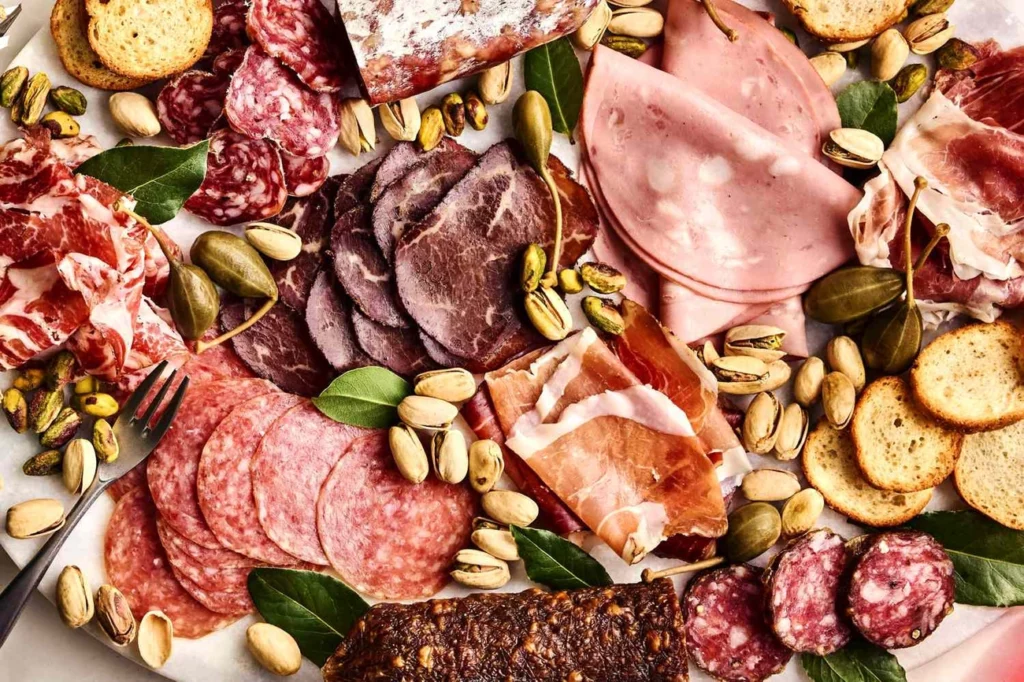

Capocollo represents one of Italy’s most distinctive cured meats, crafted from the dry-cured muscle running from the neck to the fourth or fifth rib of the pork shoulder. When I first encountered this delicacy, I was immediately struck by its rich flavor profile and the centuries of tradition behind it.
This whole-muscle salume is typically sliced very thinly and comes in various regional styles, each with its own character. Notably, four specific varieties have achieved protected status under European Union law, including capocollo di Calabria and capocollo di Martina Franca. What is capocollo exactly? It’s a traditional preparation where the muscle that runs along the neck of the pork shoulder is carefully dry cured, resulting in capocollo meat that’s both tender and flavorful. Furthermore, you can find both hot capocollo, spiced with red pepper, and sweet capocollo, seasoned with black peppercorn, giving us options to suit different palates. The curing process typically takes about two weeks, followed by a crucial drying period of approximately three months, during which the capocollo ham develops its characteristic texture and taste.
In this guide, we’ll explore everything about this celebrated Italian delicacy, from its origins and production methods to regional varieties and its growing popularity worldwide.
What is Capocollo?
The term capocollo encompasses a family of traditional Italian cured meats that have earned their place among the finest salumi in the world. Let me explain this delicacy in detail.
Origin of the name: capo + collo
The name itself reveals the anatomical origin of this delicious meat. “Capocollo” combines two Italian words: “capo” meaning head and “collo” meaning neck. This etymology perfectly describes where this cut comes from on the pig. In fact, the name serves as a geographical marker of sorts, pointing precisely to the source of this prized cut.
What part of the pig is used
Capocollo meat is crafted from the dry-cured muscle running from the neck to the fourth or fifth rib of the pork shoulder. Unlike many other cured products, capocollo is a whole-muscle salume, giving it a distinctive texture and appearance. The cut offers an ideal balance of lean meat and marbled fat that contributes to its tender texture and rich flavor. Of course, this particular section is especially prized because it features meat that is both fine and compact with just the right amount of fat marbling.
Difference between capocollo and coppa
Although often used interchangeably, subtle distinctions exist between capocollo and coppa. Generally, “capocollo” is the term preferred in southern Italy, while “coppa” dominates in northern regions like Emilia-Romagna. Additionally, other regional names include lonza or lonzino (Marche and Abruzzo) and finocchiata (Tuscany). The processing methods differ slightly between regions – coppa must be “punched” to release water during curing, whereas traditional capocollo involves a pressing stage.
Hot vs sweet capocollo
Capocollo ham comes in two main flavor profiles. Sweet capocollo (mild) typically features a spice blend incorporating cinnamon, nutmeg, cloves, bay leaves, and juniper berries. Meanwhile, hot capocollo gets its signature kick from cayenne pepper, garlic, red chili flakes, and paprika. Essentially, both varieties offer that perfect ratio of meat to fat, creating a paper-thin consistency that melts in your mouth regardless of seasoning.
What makes capocollo truly special is that it’s not brined like typical ham, resulting in a more concentrated flavor profile that makes it ideal for antipasti, sandwiches, or enjoying on its own – always sliced very thinly.
Read other Articles – 27 Cheap Backsplash Ideas That Look Like $1000 Designs (2026)
Regional Varieties of Capocollo
Across Italy’s diverse regions, capocollo takes on distinct characteristics that reflect local traditions, ingredients, and aging techniques. These regional varieties showcase the remarkable versatility of this classic Italian salumi.
Capocollo di Calabria (PDO)
This prestigious variety holds Protected Designation of Origin status under EU law. Produced throughout Calabria, it uses pigs born in Calabria, Basilicata, Sicily, Apulia, or Campania, though the animals must be raised in Calabria from at least four months of age. The meat is dry salted or brined for 4-10 days, then washed, rubbed with wine vinegar, and pressed. After adding black pepper, it’s wrapped in natural pigskin casing, hand-tied with string, and cured for at least 100 days. The final product displays a vivid pinkish-red color with distinctive fat streaks. This capocollo meat starts with a delicate flavor that intensifies with age.
Capocollo di Martina Franca
Originating in Puglia’s Itria Valley, specifically around Martina Franca, Cisternino, and Locorotondo, this variety stands out for its unique smoking process. What makes this capocollo truly special is the use of fragno bark (a local oak variety) combined with almond husks and Mediterranean herbs for smoking. Before smoking, the meat is dry-salted, washed with cooked Verdeca wine, and marinated. Subsequently, it ages naturally for at least 120 days in cellars where winds from the Adriatic and Ionian seas provide natural ventilation.
Capocollo Toscano
The Tuscan version, sometimes called Capocollo Tipico Senese, features bright red coloring with white veins of noble fat that give it exceptional sweetness. Moreover, it carries an earthy underbrush scent resulting from specific salting methods and lengthy maturation periods.
Capocollo di San Vincenzo
This Calabrian specialty uses the upper part of pork loins from pigs raised exclusively in Calabria. After deboning, the meat (typically weighing 3.5-4.5 kg) undergoes salting for 4-8 days. The producers then wash, dry, and sprinkle it with wine vinegar before seasoning. What distinguishes San Vincenzo capocollo is its spicy character, achieved by adding Calabrian pepper preserves alongside traditional peppercorns.
Other regional names: lonza, finocchiata, scamerita
Throughout Italy, this cut goes by various names. In Umbria and Valnerina, it’s known as “loin”. Tuscany calls it “scamerita”, northern Italy prefers “coppa”, and some southern areas use “locena”. Indeed, a special variant called “finocchiata” exists in Tuscany, where fennel seeds become the primary flavoring agent. Despite these regional differences, they all represent the same beloved part of the pig that spans from the head to the loin.
How Capocollo is Made
Creating authentic capocollo requires careful craftsmanship and attention to detail. The production process combines centuries-old techniques with precise measurements to achieve the perfect balance of flavor and texture.
Selection of pork cut
The journey begins with selecting the coppa muscle, also known as the “money muscle” – the well-marbled section located between the head (capo) and the fourth or fifth rib of the pork shoulder. This specific cut offers an ideal ratio of 30% fat to 70% lean meat, ensuring the capocollo remains moist and tender after drying.
Salting and seasoning
First, the meat is trimmed to create an even surface free of holes or pitting. Next, producers apply a precise salt mixture – typically 3% kosher salt relative to the meat’s weight. For a 3.5-pound capocollo, approximately 48 grams of salt would be used. Many recipes also incorporate pink curing salt (0.25% of meat weight) to maintain color and prevent spoilage.
Curing and drying process
After seasoning, the meat is vacuum-sealed or tightly wrapped and refrigerated for 5-14 days. Halfway through, the meat is often flipped and sometimes re-seasoned. Following this initial cure, the meat is rinsed, dried, and netted or wrapped in natural casings. The drying process requires controlled conditions – typically starting at around 75°F with 75% humidity, gradually dropping to 55-57°F with 80-82% humidity. Capocollo is properly cured when it loses 35-40% of its original weight.
Use of wine, herbs, and spices
The seasoning blend varies regionally but commonly includes black pepper, red pepper flakes, fennel, garlic, and sometimes wine vinegar. Hot capocollo incorporates cayenne, Calabrian chilies, or peperoncino, while sweet versions might feature cinnamon, nutmeg, juniper berries, or anise.
Differences in traditional methods
Traditional Italian methods often involve wrapping the meat in natural casings like pig skin or stomach. In Calabria, capocollo undergoes dry salting for 4-10 days, followed by vinegar rubbing and hand-tying. The Martina Franca version uniquely marinates in cooked grape must (vincotto) for six hours. Consequently, each region’s approach creates distinctive flavor profiles through variations in aging time, spice blends, and environmental conditions.
Read other Articles – What Is Seekde? A Simple Guide to the Search Engine
Capocollo Around the World
Beyond Italy’s borders, capocollo has found its way into international culinary traditions, particularly across North America where it has developed its own unique identity.
Capocollo in the U.S. and Canada
In Canada, capocollo meat is often produced locally as a traditional, very lean Italian-style deli meat. Similarly, Ontario producers create rich capocollo from the pig’s neck, cured for approximately six months. Across both nations, capocollo maintains its position as a premium cured meat, yet with regional adaptations to suit local tastes.
The rise of ‘gabagool’ in pop culture
The term “gabagool” represents a linguistic evolution rather than a mistake. This distinctive pronunciation comes from Neapolitan dialect spoken by Italian-American immigrants in the New York area. The hit series The Sopranos catapulted this term into mainstream awareness, with Tony Soprano often requesting his favorite cured meat. Eventually, this cultural reference expanded to other shows like Jersey Shore and even The Office.
American-made capocollo vs Italian imports
Regulations regarding Italian slaughterhouse conditions have historically prevented authentic Italian coppa from being exported to the United States. As a result, most American establishments carry domestically produced versions. Yet contrary to what some might expect, certain American-made products have received high praise, with one even being named “Best American Made Coppa” by Wall Street Journal.
Ham capocollo: a modern twist
In 1949, M&V Provisions created ham capocollo by combining traditional Italian capicola with boiled ham. This innovation yields a leaner product than traditional capocollo. Unlike its dry-cured cousin, ham capocollo offers versatility—suitable for breakfast, lunch, and dinner. For anyone confused by the terminology, remember that “ham” separates these two different products linguistically.
Conclusion
Throughout my exploration of capocollo, I’ve discovered a cured meat that truly represents the essence of Italian salumi tradition. This remarkable delicacy, with its perfect balance of lean meat and marbled fat, stands as a testament to centuries of Italian craftsmanship. Though known by different names across regions – coppa in the north, lonza in central Italy, or finocchiata in Tuscany – the fundamental qualities remain consistent.
What makes this pork specialty particularly fascinating is how each area of Italy transforms the same cut into something distinctively local. Calabria’s spicy version delivers that signature heat, while Martina Franca’s variant undergoes a unique smoking process with fragno bark. Additionally, the distinction between hot and sweet varieties offers versatility for different palate preferences, making this cured meat suitable for countless culinary applications.
The production process itself reflects Italian dedication to quality and tradition. From carefully selecting the perfect cut to the meticulous salting, seasoning, and aging – each step requires patience and expertise. Furthermore, the careful balance of humidity and temperature during aging creates that melt-in-your-mouth texture prized by charcuterie enthusiasts worldwide.
Beyond Italy, capocollo has certainly found its place in North American food culture. The pronunciation “gabagool” from pop culture shows like The Sopranos has undoubtedly helped introduce this delicacy to new audiences. Meanwhile, American producers have developed their own respected versions, proving this artisanal meat’s universal appeal.
Whether enjoyed paper-thin on an antipasto platter, layered in a sandwich, or paired with cheese and olives, capocollo remains one of Italy’s greatest culinary gifts. The next time you encounter this flavorful cured pork at your local deli or Italian market, you’ll appreciate not just its rich taste but also the centuries of tradition and regional pride behind every slice.
FAQs
Q1. Is capocollo safe to eat without cooking? Yes, capocollo is a cured meat that’s ready to eat. It’s typically served thinly sliced as part of an antipasto platter or in sandwiches. No additional cooking is required before consumption.
Q2. How should capocollo be stored and how long does it last? Once opened, capocollo can be stored in the refrigerator for about five days. It’s best to keep it tightly wrapped or in an airtight container to maintain its quality and prevent it from drying out.
Q3. What’s the difference between hot and sweet capocollo? Hot capocollo is seasoned with spicy ingredients like cayenne pepper or red chili flakes, giving it a kick. Sweet capocollo, on the other hand, uses milder spices such as black peppercorn, resulting in a more subtle flavor profile.
Q4. How long does the curing process for capocollo take? The curing process for capocollo typically takes several months. It starts with a salting period of about 5-14 days, followed by a drying phase that can last up to three months or more, depending on the specific regional variety and desired flavor intensity.
Q5. What are some popular ways to enjoy capocollo? Capocollo is versatile and can be enjoyed in various ways. It’s commonly served thinly sliced on charcuterie boards, used in sandwiches, added to salads, or incorporated into pasta dishes. Its rich flavor also makes it a delicious standalone snack.
Interested in similar content or opportunities. Contact Us