

What if you could build your ai ad campaign in minutes instead of waiting days for creative teams to deliver updates?
Organizations integrating AI into creative processes can obtain a 30-50 percent increase in productivity without quality loss. AI is now foundational in the ad industry, with marketers implementing the tool for ideation, production, personalization, optimization, and automation.
From ai generated ad campaign visuals to automated testing, AI ad campaign generators are transforming how we work. Whether you need ai ad campaign automation agents for scaling or ai ad campaign management tools for optimization, the technology delivers speed without sacrificing quality.
In this guide, we’ll walk you through building your first ai ad campaign optimization strategy, including essential tools, step-by-step processes, and proven techniques for faster results.
Why AI Ad Campaign Automation Saves Time

The Cost of Traditional Campaign Creation
Traditional ad production demands substantial resources and extended timelines. Billboard campaigns require at least three weeks to launch, while television spots need a minimum of one week. Multi-channel campaigns typically take six weeks at minimum, with complex launches extending to four to six months.
The expenses compound quickly. Short social ads involve hiring actors, securing studios and filming locations, paying camera crews for lighting and audio equipment, and compensating directors, producers, video editors, motion designers, and sound engineers. Multiple revision cycles and reshoots push costs into thousands or tens of thousands of dollars per campaign. Due to these constraints, frequent creative testing becomes financially impractical.
How AI Ad Campaign Generators Work
AI ad campaign generators operate on subscription models rather than per-asset pricing. Once subscribed, you can generate dozens or hundreds of ad variations from the same product assets with near-zero marginal cost per additional creative. The platforms use generative AI trained on massive datasets to analyze your input and recommend imagery and content styles that work for defined target audiences.
The technology produces text, images, and videos customized to specific audiences. Teams without in-house resources can launch dynamic campaigns, while advanced users experiment with more variations to identify and scale the most impactful ads. You can strategically allocate budgets toward top performers, accordingly optimizing resources and campaign effectiveness.
Speed vs Quality: What to Expect
Production speed represents one of the most immediate advantages. Ads can be generated in minutes instead of the days or weeks required for traditional workflows. A Fortune 500 automaker produced 4x more personalized ad variations in half their usual time investment. Marketing teams bring campaigns to market up to 75% faster with AI tools automating data analysis, campaign adjustments, and content creation.
Automated ad creation produces content 50-90% faster, letting you reallocate saved costs to paid promotion and other critical areas. Analysis of hundreds of thousands of real-world ads found that AI-generated content achieved higher average click-through rates compared to human-made ads. Currently, 69.1% of marketers have implemented AI in their marketing strategies, with 34.1% reporting significant outcome improvements.
Essential AI Tools for Building Ad Campaigns
AI Image Generation Platforms
Visual assets drive ad performance, and AI image generators produce them at scale. Gemini and ChatGPT deliver accurate, detailed images for various campaign needs. Adobe Firefly integrates directly with Photoshop and Illustrator, enabling seamless transitions from concept to production. Canva excels with its intuitive drag-and-drop interface and template library for rapid ad variation testing. AdCreative.ai generates conversion-focused ad creatives in seconds across platforms and offers creative scoring AI with over 90% accuracy predictions.
AI Ad Campaign Automation Agents
Automation agents handle end-to-end campaign execution without manual intervention. Smartly builds cross-channel ads in one-third the time and enables automated multi-platform media management across social channels. AdScale turns store data into fully optimized media plans across Google and Meta with one click, using first-party data to identify high-value audiences. MindStudio provides visual workflow builders for non-technical marketers to design agent behaviors, while ActiveCampaign’s AI saves marketers an average of 13 hours per week.
AI Copywriting and Creative Tools
Jasper cuts the ad copywriting process in half and supports 30+ languages for global campaigns. Copy.ai delivers usable copy in under a minute with pre-built templates for major platforms. Anyword adds predictive performance scores estimating conversion likelihood before publication. ChatGPT handles nuanced instructions for custom ad formats. Pixis combines copy generation with campaign optimization, testing variations and scaling winners automatically.
Campaign Management Platforms
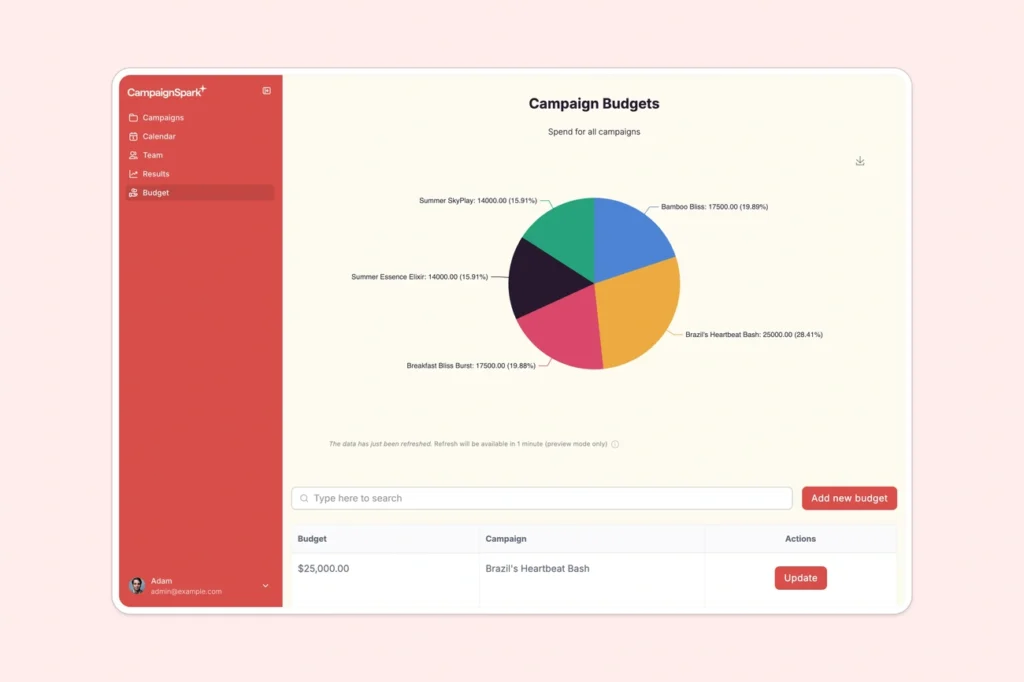
Smartly’s predictive budget allocation shifts spend to winners across channels in real time. AdScale auto-generates high-impact creatives tailored by ad type and platform while maintaining user control over budgets and targeting. Motion’s AI analyzes performance, identifies top creatives, and provides actionable insights for faster optimization.
Performance Tracking Tools
Madgicx users report ROAS improvements within 30 days with 73% reduction in manual optimization time. Hyros improves attribution accuracy by 20-40% for complex customer journeys. Google Analytics 4 offers cross-platform tracking with machine learning insights. Triple Whale provides e-commerce-specific attribution with first-party pixel tracking.
Step-by-Step Process to Build Your First AI Generated Ad Campaign
1. Define Your Campaign Goals and Audience
Before opening any tool, establish what you want to achieve. Define whether you need leads, sales, engagement, or signups. Use AI to validate your objective by asking it to map out a funnel strategy or generate audience angles for specific stages. Apply frameworks like SMART goals to ensure targets are specific and measurable. Ground your targeting in data rather than assumptions, using historical CRM insights and site analytics to build precise customer profiles. Ask AI to create detailed buyer personas that include demographics, pain points, and communication preferences.
2. Choose Your AI Ad Campaign Generator
Select a generator that integrates with your existing workflows rather than one with the most features. Canva Grow offers end-to-end performance marketing with direct publishing to Meta Paid Ads. AdGen AI generates on-brand creatives from a single website URL without requiring specific prompts. AdCreative.ai produces conversion-focused ad creatives using proprietary AI models trained on real performance data. Test the tool first with a controlled experiment before broad rollout.
3. Create Visual Assets with AI Image Tools
Access AI image generators within your chosen platform. Select the product you want to promote, then let the system automatically generate enhanced product images. Use prompts and themes to refine or generate new creative variations. Save custom images to your creative assets library for future campaigns. Generate multiple background variations, font styles, and file formats to test which performs best.
4. Generate Ad Copy and Variations
Provide your AI tool with offer details, target audience, and campaign goal. Specify the desired tone and character limits for each platform. Generate 5-10 copy variations with different hooks, angles, and benefit stacks. Use proven frameworks like AIDA or PAS that the AI can apply automatically. Request multiple headlines and descriptions, as Google will mix and match to find optimal combinations.
5. Set Up Campaign Structure and Targeting
Organize campaigns around specific goals, not individual products. Choose Smart Bidding strategies like Maximize conversions once you have baseline data. Set daily budgets at the campaign level and select targeted locations and languages. Add 5-15 related keywords per ad group using broad match if you’re using Smart Bidding. Use AI to brainstorm relevant interests, behaviors, and keywords for your target customers.
6. Launch and Monitor Initial Performance
Set up conversion tracking before going live. Give the system time and data to learn, as Smart Bidding requires initial optimization periods. Monitor conversions, cost per conversion, and ROAS rather than vanity metrics. Review search terms regularly to add performing queries as new keywords and exclude irrelevant ones as negatives. Let AI analyze initial results and provide recommendations for which ads to keep, pause, or test next.
AI Ad Campaign Optimization and Management
Automated A/B Testing Strategies
AI eliminates the wait for statistical significance by predicting performance from early engagement signals. Instead of running tests for days, machine learning algorithms analyze how users interact with ads and forecast conversion likelihood before you exhaust the budget. The multi-armed bandit approach yields 5-10% higher conversion efficiency during active test cycles by quickly rewarding winning hypotheses. AI handles multivariate testing simultaneously across countless creative elements, making split-second decisions based on complex patterns that traditional A/B testing misses. One agency used AI to develop dozens of ad creative variations in minutes, then ran predictive analysis to identify the most effective visuals and headlines, which increased conversion rates and decreased cost per lead across all channels.
Using AI for Audience Refinement
Machine learning identifies micro-segments within broader audiences that convert at dramatically different rates. AI processes both structured and unstructured data to create dynamic customer profiles, finding individuals who visited specific product pages multiple times, abandoned carts, and engaged with competitor ads within 24 hours. Nielsen’s analysis found that AI-driven YouTube campaigns had 17% higher ROAS than manual campaigns. These systems spot behavioral patterns humans miss, refining targeting continuously as new data flows in. AI groups users based on subtle similarities in online behaviors and purchase intent rather than basic demographics.
Real-Time Performance Adjustments
AI optimization operates in continuous learning loops rather than testing cycles. Every conversion feeds back into the model, refining predictions constantly. Media buying now functions at impression level, with AI evaluating bid opportunities in milliseconds by factoring user signals, historical performance, and inventory conditions. Smartly’s Predictive Budget Allocation continuously analyzes performance signals to automatically reallocate budget and surface the next best action, ensuring every dollar works harder in real-time. 56% of marketers rank sales lift as their top measurement goal, with machine learning now allowing automatic budget reallocation mid-campaign.
Scaling Successful Campaigns
AI identifies which creative themes drive performance by grouping assets by visual and thematic elements, so you can focus spend on what works best for your audience. Function Growth implemented an AI Agent that continuously monitored campaign data, detected trends, and surfaced actionable insights directly within workflows. The system proactively flagged performance shifts and suggested budget reallocation, allowing real-time campaign adjustments. One agency used AI for ad spend optimization across multiple channels, identifying underperforming segments and reallocating budget to higher-performing areas while suggesting new audience segments, resulting in a 25% increase in conversion rates and 25% reduction in cost per acquisition.
Conclusion
You now have everything you need to build AI ad campaigns that deliver results in half the time. We’ve covered the essential tools, the complete process, and optimization strategies that actually work.
Start with one campaign using the steps above. Test a few AI tools to find what fits your workflow best. Overall, the key is consistent testing and letting AI handle the repetitive work while you focus on strategy.
Your first AI-powered campaign won’t be perfect, but in time, you’ll master the process and see real performance gains.
FAQs
Q1. How can AI help create Facebook ads more efficiently? To create Facebook ads with AI, you provide the AI generator with details about your content type, company name, and product description. You can optimize the output by including relevant keywords and terms to avoid. The AI then generates multiple ad variations, allowing you to select the best-performing options from the generated content.
Q2. What are some real-world examples of AI being used in advertising? AI is commonly used for dynamic pricing in advertising, where it adjusts ad costs in real time based on supply and demand. For instance, restaurant advertisers can benefit from AI increasing ad prices during peak meal times like lunch and dinner, ensuring their ads gain more visibility when potential customers are actively searching for dining options.
Q3. How much faster can AI tools help launch ad campaigns compared to traditional methods? AI tools can help marketing teams bring campaigns to market up to 75% faster than traditional workflows. While traditional billboard campaigns require at least three weeks and multi-channel campaigns can take four to six months, AI-powered tools can generate ads in minutes and produce content 50-90% faster than conventional methods.
Q4. What kind of performance improvements can I expect from AI-generated ads? Analysis of hundreds of thousands of real-world ads shows that AI-generated content achieves higher average click-through rates compared to human-made ads. Additionally, AI-driven campaigns have demonstrated 17% higher return on ad spend (ROAS) than manually managed campaigns, with some businesses reporting a 25% increase in conversion rates and 25% reduction in cost per acquisition.
Q5. Do I need technical expertise to use AI ad campaign tools? No, many modern AI ad campaign tools are designed for non-technical marketers. Platforms like Canva offer intuitive drag-and-drop interfaces, while tools like MindStudio provide visual workflow builders that allow you to design campaign behaviors without coding knowledge. Most AI generators work through simple prompts and selections rather than requiring technical skills.
People Also Read: What Are Anime Terms? Essential Japanese Words for Fans