
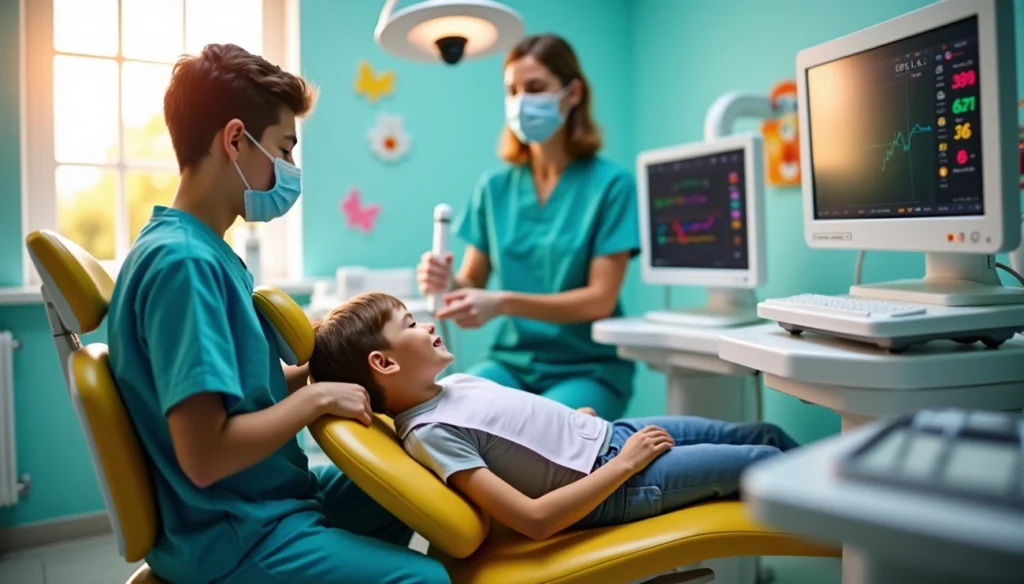

When considering having our child under anesthesia for dental work, many of us as parents experience a wave of anxiety and concern. Is it really safe? What if something goes wrong? These questions are completely natural.
Fortunately, pediatric dental sedation has become significantly safer in recent years. In 2019, the American Academy of Pediatrics and the American Academy of Pediatric Dentistry updated their guidelines for pediatric dental anesthesia, now requiring at least two trained professionals to be present during deep sedation or general anesthesia procedures. Furthermore, sedation dentistry for kids has evolved to include various options designed specifically to address children’s unique needs, whether they experience severe anxiety or require extensive dental work. Indeed, while the thought of children’s sedation dentistry might seem intimidating at first, understanding the safety protocols and options available can help us make informed decisions about our child’s dental care.
In this comprehensive guide, we’ll explore the different types of anesthesia used in pediatric dentistry, who administers these procedures, essential questions to ask your provider, and most importantly, address the pressing question: is it safe to put a child under anesthesia for dental work?
Understanding Pediatric Dental Anesthesia
Pediatric dental sedation exists on a spectrum from mild calming to complete unconsciousness. Each year, an estimated 100,000 to 250,000 pediatric dental sedations are performed in the United States. Understanding why and when these procedures are necessary helps us make informed decisions about our children’s dental care.
Why sedation is sometimes necessary
Children may need dental sedation for several reasons. High levels of dental anxiety is one of the most common factors. Many children experience significant fear about dental visits that can make treatment impossible without some form of sedation.
Additionally, some young patients simply cannot remain still long enough for a dentist to safely complete procedures. For very young children who may not understand instructions or be able to cooperate, sedation provides a practical solution. This is particularly important since many dental procedures require the patient to lie completely still for safety and precision.
Children with special healthcare needs often benefit from sedation as well. These patients may not be able to sit still or cooperate during dental procedures, and sedation ensures they receive necessary dental care safely.
Common procedures that may require anesthesia
Several types of dental work commonly require some form of sedation:
- Extensive dental treatments for severe decay or multiple cavities
- Tooth extractions due to infection, trauma, or orthodontic preparation
- Surgical procedures for jaw deformities or facial trauma
- Complex restorations that require precision and patient immobility
Children with significant decay or fractured teeth often need to remain perfectly still for extended periods to ensure materials bond correctly. Consequently, what might seem like “cosmetic” procedures often overlap with functional needs that require sedation.
Is it safe to put a child under anesthesia for dental work?
Research shows that when sedation is administered by trained pediatric specialists following established guidelines, the success rate is remarkably high. However, it’s important to understand that sedation exists on a continuum, and each patient responds uniquely to medication. A dose that produces minimal sedation in one child might result in deep sedation in another.
The 2019 guidelines from the American Academy of Pediatrics and the American Academy of Pediatric Dentistry now require that at least two professionals trained in advanced life support be present during deep sedation or general anesthesia. This is crucial because life-threatening emergencies may occur at any time, regardless of a child’s health status.
Despite these precautions, parents should be aware that the youngest children (particularly those under 6 months) may be at greater risk of adverse events. Nevertheless, the overall safety profile of properly administered pediatric dental sedation is excellent when proper protocols are followed.
Read other Articles – Is Your Website Stuck in the Google Sandbox? Here’s What Works
Types of Sedation Dentistry for Kids

Image Source: Coastal Pediatric Dental
Dental professionals offer a range of sedation options tailored to each child’s specific needs. These options vary in intensity, from mild relaxation to complete unconsciousness. Let me walk you through each type to help you understand what might be best for your little one.
Nitrous oxide (laughing gas)
Nitrous oxide, commonly called laughing gas, is the mildest form of sedation. My child inhales it through a small mask, producing a calming effect while remaining fully awake. This option works wonderfully for routine cleanings or simple fillings. The effects kick in quickly and wear off within minutes after removing the mask. Some children may experience mild nausea, although side effects are generally rare.
Oral and mild sedation
For slightly deeper relaxation, oral sedation involves taking a liquid or pill about an hour before treatment. This creates a drowsy state where my child stays conscious but feels less anxious. It’s ideal for moderately anxious children undergoing procedures like cavity repairs. The effects last several hours, so we’ll need to plan for rest afterward.
Moderate sedation
Moderate sedation produces a deeper calming effect while maintaining consciousness. My child may become quite sleepy yet still respond to verbal commands. This level is appropriate for longer procedures or children with higher anxiety levels. The medication might be administered orally or through other routes, and my child may have little memory of the procedure afterward.
Deep sedation
With deep sedation, typically delivered intravenously, my child will be in a sleep-like state but can be awakened if necessary. This option requires at least one additional qualified professional to monitor vital signs throughout the procedure. Deep sedation is suitable for lengthy treatments or extremely anxious children.
General anesthesia
General anesthesia renders my child completely unconscious. It’s administered by specially-trained anesthesia professionals while a separate dentist performs the procedure. This option allows all necessary dental work to be completed in a single visit. It’s typically reserved for extensive procedures, children with special needs, or cases where other sedation methods aren’t appropriate.
Disclaimer: Always consult with your child’s dentist and anesthesia provider about the most appropriate sedation option based on your child’s specific needs, health status, and the planned dental procedure.
Who Administers Pediatric Dental Sedation?

Image Source: Pediatric Dental Practice Magazine
The safety of having your child under anesthesia for dental work depends greatly on who administers and monitors the sedation. Understanding the qualifications of these professionals can help ease your concerns about pediatric dental sedation.
Pediatric dentist vs. general dentist
Pediatric dentists undergo additional 2-3 years of specialized training beyond dental school, including pediatric sedation training. Throughout their residency, they gain experience administering various levels of sedation. In fact, over 70% of board-certified pediatric dentists use some form of sedation in their practices. General dentists, meanwhile, have completed dental school and obtained state licensure, yet typically have less specialized training with pediatric patients.
Role of anesthesiologists and nurse anesthetists
Dentist anesthesiologists and physician anesthesiologists complete 3-5 years of specialized anesthesia training after dental or medical school. Certified Registered Nurse Anesthetists (CRNAs) are registered nurses with additional specialized training who provide 50 million anesthetics yearly. These professionals focus exclusively on administering and monitoring anesthesia rather than performing dental procedures simultaneously.
What is a dental sedation assistant?
Dental sedation assistants receive specialized training to help monitor sedated patients. They must complete a board-approved dental sedation assistant course, basic life support training, and pass a written examination. Essentially, their duties include monitoring vital signs, assisting with drug preparation, and helping with emergency responses—all under direct supervision.
Why an independent observer is required
Updated guidelines from 2019 explicitly require at least two individuals with specific training during deep sedation/general anesthesia procedures. The independent observer must have no responsibilities beyond monitoring the patient’s condition and being prepared to assist with emergencies. Both this observer and the operating dentist must maintain Pediatric Advanced Life Support (PALS) certification.
Read other Articles – What Is Content Decay? A Clear Guide to Fix Dropping Rankings
What Parents Should Ask Before the Procedure
Asking the right questions before your child undergoes dental sedation empowers you to make informed decisions about their care. Being prepared helps ensure both safety and peace of mind throughout the process.
What type of sedation will be used?
First of all, understand exactly what level of sedation is planned. Ask whether it will be minimal sedation (relaxed but awake), moderate sedation (sleepy but awake), deep sedation (barely awake), or general anesthesia (unconscious). Moreover, inquire about why this specific method was selected for your child’s situation. The type of sedation recommended depends primarily on the complexity of the dental work and your child’s anxiety level.
Who will monitor my child?
Above all, confirm who will be responsible for monitoring your child during the procedure. According to updated guidelines, at least two professionals trained in advanced life support must be present during deep sedation or general anesthesia. Additionally, ask whether vital signs like oxygen saturation, blood pressure, and heart rate will be continuously monitored. The presence of an independent observer whose sole responsibility is patient monitoring is crucial for safety.
What are the risks and side effects?
Given these points, discuss potential complications specific to your child. Studies show sedation complications are more likely in children younger than six years old. Common side effects include drowsiness (60.1% of children sleep on the way home), nausea (19.6%), and vomiting. Children with special healthcare needs or certain anatomical features may face higher risks.
What should I do before and after the appointment?
Accordingly, understand fasting requirements—these vary by sedation type. For nitrous oxide, light meals are typically allowed; for oral sedation or general anesthesia, strict fasting (usually from midnight) is required. Following the procedure, your child will need supervision until fully recovered. They should avoid physical activities requiring balance or coordination for the rest of the day.
Disclaimer: Every child responds differently to sedation. Always consult with qualified dental and medical professionals about your child’s specific needs and circumstances.
Conclusion
Entrusting your child’s dental care to professionals can certainly feel overwhelming, especially when anesthesia is involved. Though many of us experience natural anxiety about this prospect, understanding the safety protocols, sedation options, and qualified professionals involved helps significantly reduce those concerns. Children’s dental sedation has undoubtedly become safer with the implementation of updated guidelines requiring multiple trained professionals during procedures.
First and foremost, remember that pediatric dental sedation exists on a spectrum. Options range from mild nitrous oxide for simple procedures to general anesthesia for extensive work. Each serves specific needs based on your child’s age, temperament, and required treatment. Additionally, the professionals administering these sedatives have specialized training – particularly pediatric dentists who complete years of additional education beyond dental school.
Before scheduling any procedure, we must feel comfortable asking detailed questions about the type of sedation planned, who will monitor our child, potential risks, and pre/post-appointment instructions. After all, our role as parents involves advocating for our children’s safety while ensuring they receive necessary dental care.
While no medical procedure is completely without risk, properly administered dental sedation by qualified professionals follows strict safety protocols that make serious complications extremely rare. The youngest patients may face slightly higher risks, which makes the selection of experienced providers particularly important.
Ultimately, dental sedation allows many children – especially those with severe anxiety or special healthcare needs – to receive essential dental care they might otherwise miss. With careful selection of providers, thorough communication, and proper understanding of the process, we can help our children maintain healthy smiles without unnecessary trauma or fear.
Disclaimer: The information provided in this article is for educational purposes only and does not replace professional medical or dental advice. Each child’s needs are unique, and parents should consult with qualified dental and medical professionals about specific concerns regarding their child’s dental care and sedation options.
FAQs
Q1. Is dental anesthesia safe for young children? Dental anesthesia is generally very safe for young children when administered by trained professionals. While there are always risks with any medical procedure, serious complications are extremely rare. Dentists and anesthesiologists follow strict safety protocols to ensure the child’s wellbeing throughout the procedure.
Q2. What types of sedation are used for pediatric dental procedures? There are several types of sedation used in pediatric dentistry, ranging from mild to deep. These include nitrous oxide (laughing gas), oral sedation, moderate sedation, deep sedation, and general anesthesia. The type used depends on the child’s age, anxiety level, and the complexity of the dental work required.
Q3. Who administers and monitors the anesthesia during a child’s dental procedure? Anesthesia is typically administered and monitored by a qualified professional such as a pediatric dentist, anesthesiologist, or certified registered nurse anesthetist (CRNA). For deep sedation or general anesthesia, at least two trained professionals are required to be present to ensure the child’s safety.
Q4. What should parents do to prepare their child for dental sedation? Parents should follow the dentist’s pre-procedure instructions carefully, which may include fasting guidelines. It’s important to discuss any concerns with the dental team, ask about the type of sedation being used, and inquire about monitoring procedures. Keeping the child calm and explaining the process in an age-appropriate manner can also help.
Q5. How long does it take for a child to recover from dental anesthesia? Recovery time varies depending on the type and duration of sedation used. With nitrous oxide, effects wear off quickly. For deeper sedation or general anesthesia, children may be groggy for several hours afterward. Most children can return to normal activities the next day, but should be supervised closely immediately after the procedure.